
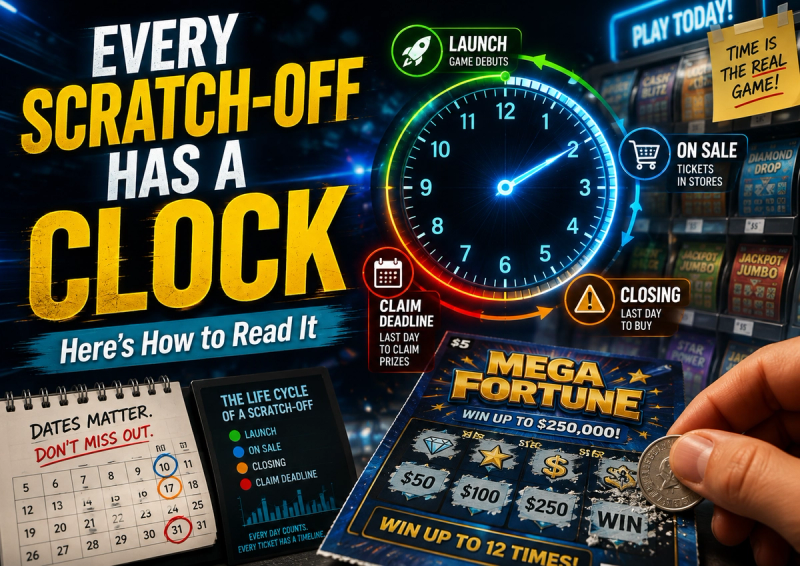
Every Scratch-Off Has a Clock. Here's How to Read It.
8/17/2026
By Doug Moeller | Professional Gambler & Founder of Savvy Scratch Published August 2026
Most players think a scratch-off game has two states: on the shelf or not on the shelf. You buy it, you scratch it, done. That's it.
It's not it. Every scratch-off game runs on a clock the state sets before the first ticket ever hits a counter. There's a day it launches, a day the lottery decides to pull it, a day retailers can't sell it anymore, and a hard deadline after that where any winning ticket you're still holding turns into a worthless piece of paper. Four dates. The lottery publishes them. Almost nobody reads them, and it costs players real money in two different ways.
This isn't about odds. I've written plenty about which games are worth playing. This is about the calendar underneath the odds, the part that decides whether the game you're eyeing is fresh, dying, or already dead, and whether the ticket in your pocket is a winner or a souvenir.
The four stages of a scratch-off's life
Launch. The game gets printed in one finite run and ships to stores. Every top prize it will ever have is baked in right now. This is the freshest the game will ever be.
On sale. Tickets sell, prizes get claimed, and the game slowly gets picked over. This is the only stage most players know exists.
Closed (end of sale). At some point the lottery "calls" the game. Retailers pull it, and you can't buy it anymore. Here's the part that catches people: a game can get called while top prizes are still sitting unclaimed. It doesn't have to sell out or pay out its grand prizes first. If sales go soft, the state can just end it.
Claim deadline. After a game closes, you still get a window to redeem winning tickets, but it's finite. In Texas, for example, prizes must be claimed within 180 days of the game's close. Other states run a full year. Miss it and the money is gone for good, no appeals.
Four stages, and two of them are invisible to a player who only ever looks at the rack.
The poker clock nobody warns you about
When you sit down in a poker tournament, the blinds go up on a clock. A stack that's perfectly healthy right now is dead in forty minutes if you sit on your hands, because the game keeps moving whether you act or not. New players always focus on their cards. Experienced tournament players are watching the clock just as hard, because the clock decides how much time your cards have left to matter. I've folded hands I liked and shoved hands I didn't, purely because of where the clock was.
Scratch-offs have the exact same hidden clock. The game you're looking at isn't a static thing sitting on a shelf. It's somewhere in a life cycle that's ticking forward on a schedule the lottery controls and you don't. Buying a ticket without knowing where you are on that clock is like moving chips into a pot without noticing the blinds are about to eat your stack. The card in front of you isn't the whole picture. The timing is.
Trap one: buying into a dead or dying game
Walk into any store and some of the games on that rack are fresh, and some are on their last legs, weeks from being pulled with their best prizes already claimed. They look identical behind the counter glass. Same shine, same price, same official state logo.
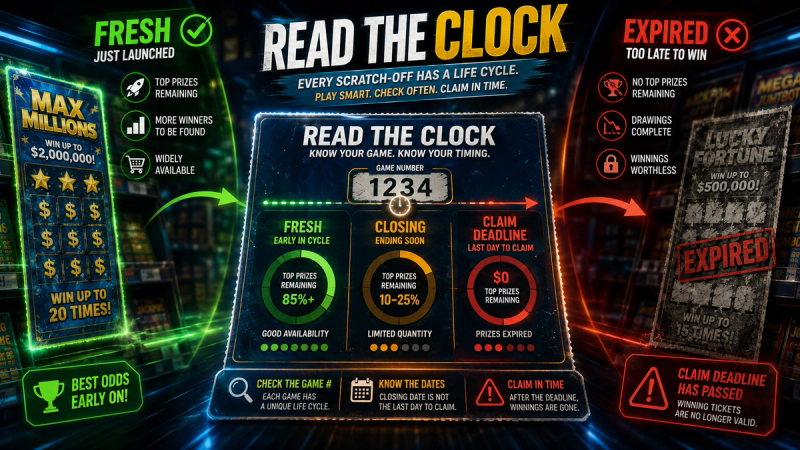
The state actually tells you which is which. Most lotteries publish a "games ending soon" or "closing games" page, listing exactly what's been called and when it comes off sale. It's public. It's free. And I'd bet the vast majority of the people buying those closing games have never seen it. This is the same reason I keep hammering that the printed odds on the back of a ticket only tell you launch-day information and nothing about where the game is today.
The move is simple. Before you sink money into a game, know whether it's fresh with its top prizes intact or a picked-over game limping toward its close date. One of those is worth your money. The other is the lottery clearing out inventory, and you're the one helping them do it.
Trap two: the winning ticket you let expire
This one physically hurts to think about. People win, toss the ticket in a glovebox or a junk drawer meaning to cash it later, and then the claim window quietly closes. The prize gets forfeited. It happens with small wins constantly and with big ones more often than you'd think.
In blackjack and poker, I learned a hard rule early: you cash your chips before you leave the building. A rack of chips feels like money, but it isn't money until the cage pays you. Walk out with them in your pocket, come back after the promotion's expired or the property's changed hands, and you're holding plastic. An unredeemed winning scratch-off is the exact same thing. It feels like a win sitting in your car, but it's only a win until the deadline, and after that it's a printed coupon for nothing.
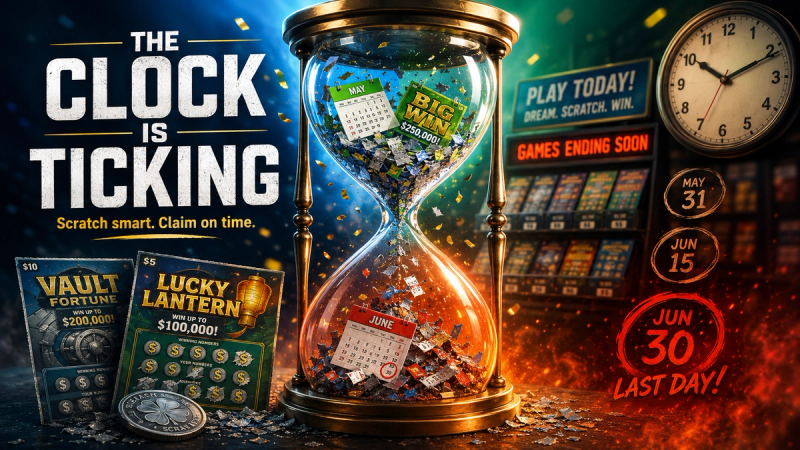
Check your tickets promptly, redeem winners without sitting on them, and if you're holding anything from a game you know has closed, look up that game's final claim date immediately. That date is not a suggestion.
How to actually read the clock
Every ticket carries a game number printed on it, usually on the back alongside the pack and ticket numbers. That game number is the key that unlocks everything: it's how you look up a specific game's remaining top prizes, its odds, and, critically, whether it's been called for closing and when the claim deadline lands. It is not a code that predicts whether your individual ticket is a winner. Ticket position doesn't work that way, and anyone selling you a "system" based on ticket numbers is running the kind of scam I break down in my rundown of lottery strategies that actually work versus the ones that don't. The game number is a lookup tool, nothing more, but it's a powerful one.
Doing this by hand means digging through your state lottery's site, cross-referencing the closing-games page against the remaining-prizes page against the odds. That's the tedious part, and it's exactly the job Savvy Scratch automates. We track which games are fresh, which are getting called, and where the real prizes still sit, across every state we cover, so you can see a game's whole clock at a glance instead of buying blind and hoping. If you want to see what that looks like in practice, my Oklahoma breakdown walks through reading a state's games the way I do, and the odds calculator guide shows the math side of it.
None of this guarantees a win. Nothing does, and anybody who tells you different is lying. But playing a game that's fresh instead of dying, and never letting a winner expire, are two decisions fully inside your control, on a clock most players never even knew was running.
About the Author: Doug Moeller is a professional gambler with over 15 years of experience in poker, blackjack card counting, and casino advantage play, with over $500K in lifetime winnings. He built Savvy Scratch to bring the same data-driven discipline that works at casino tables and tournament clocks to scratch-off lottery tickets. Follow Doug on X | YouTube
See which games in your state are fresh, which are about to close, and where the top prizes still sit. Start with Savvy Scratch.