Do Higher-Priced Scratch-Offs Have Better Jackpot Odds?
5/17/2026
By Doug Moeller | Professional Gambler & Founder of Savvy Scratch
The $30 ticket looks like the smart play. Bigger art, bigger prize across the top, bigger number on the price tag. Standing at the counter, almost everyone makes the same assumption: spend more, get a better shot at the big one.
It is one of the cleanest sleights of hand in the entire lottery business.
Higher-priced scratch-offs usually offer bigger jackpots. That part is true. But "bigger jackpot" is not the same thing as "better odds at a jackpot," and after fifteen years making a living off games of chance I can tell you those two ideas get conflated more than any other in this product category. The lottery design teams know it. The marketing teams know it. The clerks selling you the ticket do not know it, and that is exactly why the assumption keeps working.
So let's settle this with actual numbers instead of vibes. Do you really get better jackpot odds when you spend more per ticket? Sometimes yes, sometimes no, and the rule of thumb most players are working off is broken in a way that costs them real money over a year.
What Higher Prices Actually Buy You
Spend more on a scratch-off and you are buying three things. A bigger advertised top prize. Usually better overall odds of winning some kind of prize. And almost always, a richer mid-tier prize structure. That is what the higher price funds. It is not arbitrary, the math has to work out for the state.
Look at California Scratchers right now. California Jackpot is a $10 ticket with a one million dollar top prize. Cash King at $20 sits at five million. The $30 ticket 7's tops out at ten million. The dollar number on the front of the ticket goes up with the dollar number on the price tag. Across most states it works that way.
If you stopped there, "higher price equals better" looks correct. The problem is, almost nobody is buying a scratch-off for the jackpot at the headline number. They are buying it for a chance at the jackpot at the headline number. Those are very different products.
A Bigger Jackpot With Worse Odds Is Just A Bigger Lottery Ticket
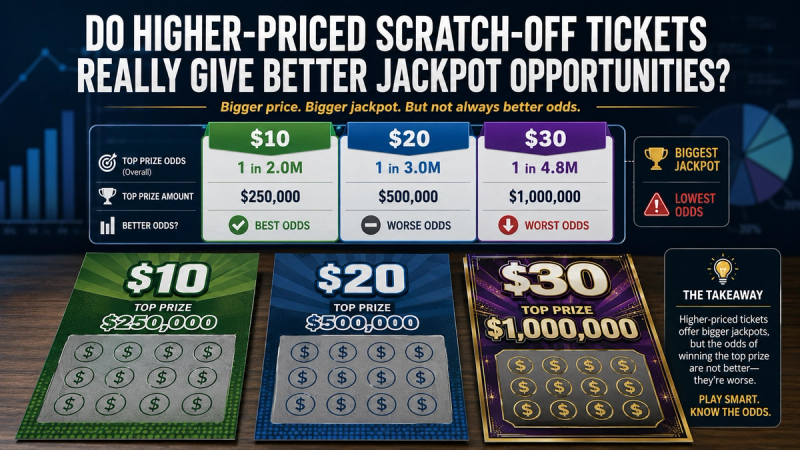
Stay with the California lineup for a second. California Jackpot, the $10 ticket, starts with top-prize odds of about 1 in 2,047,812. Cash King at $20 starts at 1 in 3,054,125. Crossword Xtreme at $30 starts at 1 in 4,800,000.
The prize amounts go up. The odds of actually hitting the prize get worse. Almost twice as bad from the $10 to the $30, in this snapshot.
That is not a fluke. That is a deliberate design pattern. A bigger top prize means more total dollars to cover, but the state still needs the math to work for its margin. The cleanest way to balance both at a higher price point is to make the top prize bigger and the chance of hitting it rarer. The headline number does the heavy lifting in marketing. The odds get quietly stretched out.
Same lottery wall. Same gas station counter. The $10 game in the example above gives you more than twice the original top-prize hit rate of the $30 game next to it. None of that is printed anywhere a normal player will read it.
The "Overall Odds" Trick
Here is where the second layer of confusion comes in.
When a player tries to defend the higher-priced ticket they almost always land on overall odds. The back of the $30 ticket says 1 in 2.71. The $20 ticket says 1 in 3.00. The $10 ticket says 1 in 3.42. So the more expensive ticket "has better odds." Right?
Wrong, and badly so. Overall odds describe your chance of hitting any prize, including the prize that just hands you back your money. On a $10 ticket, winning $10 is technically a win for the purpose of that math. So is winning $5 on a $5 ticket. So is winning $2 on a $2 ticket. They are all listed as "wins" in the calculation that produces the 1 in 3 or 1 in 4 you see on the back.
Premium tickets juice their overall-odds number partly by stuffing the prize pool with break-even outcomes. That is not winning. That is a treadmill. I have written separately about why overall odds are almost meaningless for actual buying decisions, and it applies just as hard here. If you are paying $30 a pop and your "wins" are mostly $30 back, you are funding the game one ticket at a time and calling it luck.
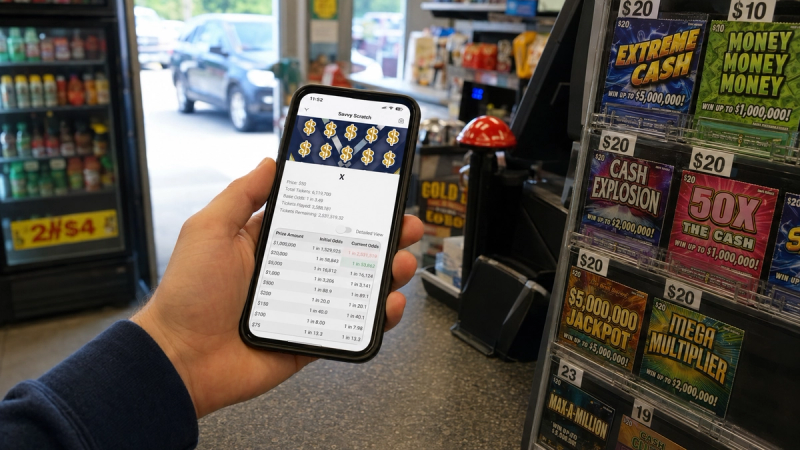
The math of how price tiers connect to jackpot odds and overall odds is honestly one of the cleanest cons in the consumer gambling world. The advertised number that sounds impressive (1 in 2.71) describes a category of outcomes you do not actually want. The number that describes the outcome you do want (jackpot odds) is buried, harder to read, and very often worse on the more expensive ticket.
Where The Card Counting Lens Helps
When I was counting cards in casinos there were two completely separate questions every session. Which game was I sitting down to. And, once I sat down, what was the state of the shoe.
A higher-limit table is a bigger game. Bigger swings, bigger wins, bigger losses. None of that, by itself, tells you whether it is a good time to put money out. A $25 minimum table with a fresh shoe and a count of zero is a worse spot than a $5 table that just went through a brick of low cards and now has a shoe full of tens and aces. The minimum bet at the table is the price of admission. The count tells you whether the seat is worth taking.
Scratch-off pricing is the casino-floor equivalent of the table minimum. A $30 game is a "bigger table." That is all it tells you. It does not tell you anything about the state of the prize pool sitting underneath that game. A $30 game that launched six months ago and has had three of its four top prizes claimed is a bad shoe with a high minimum. A $5 game that just hit a long stretch where the jackpots survived while plenty of tickets sold is a small table running hot.
If a card counter walked into a casino, glanced at the table-minimum signs, and just sat at the highest one because "more expensive must mean better odds," every other counter in the room would buy a drink to watch the disaster unfold. That is the exact mistake a scratch-off player makes when they let price be the deciding factor.
What Actually Decides A Jackpot Hunt
If you strip everything else out, the only number that determines whether a scratch-off is a real jackpot opportunity is this. How many top prizes are still in the unsold inventory, compared to how far the game has sold through.
That is it. Not price. Not overall odds. Not the brightness of the artwork. Not your cousin's lucky store. The current jackpot-to-ticket ratio compared to the ratio the game launched with.
A $30 game that started with four top prizes and has lost three of them, with millions of tickets still on shelves, is mathematically a worse jackpot opportunity than a $5 game that started with three top prizes and still has all three sitting in roughly half its remaining inventory. The $30 ticket has a flashier price and a bigger headline. The $5 ticket has the live jackpots. The math does not care which one feels more serious to buy.
This is why I keep coming back to the idea that top-prize health is the only metric that actually matters in scratch-offs. Everything else, including price, is secondary. A premium ticket whose jackpots are gone is just a more expensive way to break even.
Ready to stop guessing? Sign up free at Savvy Scratch to see the Bad and New games in your state right now. The full ratings unlock at $5/month or $50/year, with a 30-day worry-free guarantee.
Why Premium Tickets Are More Likely To Be Picked Over
There is one more wrinkle that makes the "spend more, get more" assumption especially dangerous. Premium tickets get hunted harder.
Serious players who already know what to look for tend to gravitate toward the higher price points, because that is where the big top prizes live. So the moment a $30 game launches with juicy top-prize density, the people who track this stuff start working through it. The big prizes at premium tiers tend to come off faster than the big prizes at the lower tiers, simply because more attention is on them.
Meanwhile the $2 and $5 games can sit on shelves quietly turning over without anyone watching the jackpot column carefully. Sometimes that means a low-priced game ends up in a much more favorable spot than the flashy game next to it, purely because nobody bothered to hunt it.
This is the exact reason that the best scratch-off ticket in your state on a given day is decided by the data, not the price tier. The premium ticket has a target on its back. The cheap ticket is invisible. Sometimes invisibility is where the value lives.
The Right Way To Think About Price
None of this means premium tickets are bad. It means price is the wrong question.
There is a version of this same conversation that runs through every poker room I have ever played in. New players walk in and ask, "Where should I sit, the $1/$2 table or the $5/$10?" They think the question is about stakes. The right question is "Where is the best table, regardless of stakes?" A soft $5/$10 table is a great seat. A tight $1/$2 table full of grinders is a brutal one. The stakes label tells you the price of being in the game. It tells you nothing about the quality of the game.
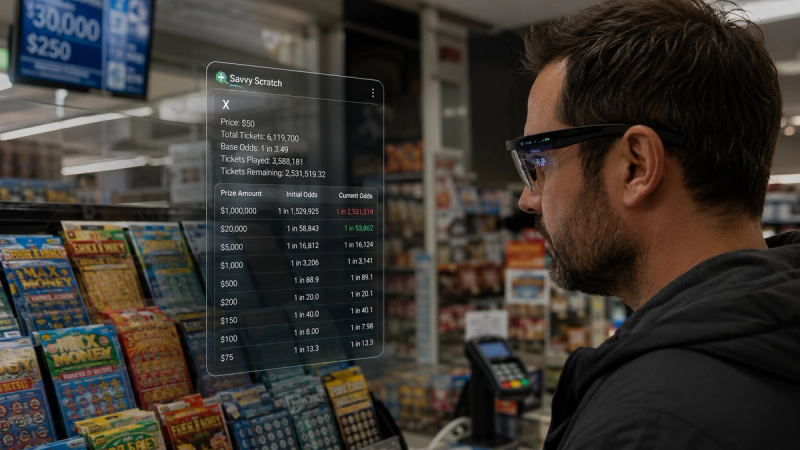
Apply the same filter to scratch-offs. Pick a price you are comfortable with based on your bankroll, not based on which price tier you think has the best odds. Then, inside that price tier, find the live game. If you want to spend $5 because that is what your weekly budget supports, your job is to find the best $5 ticket in your state right now. If you want to spend $30, your job is to find the best $30 ticket in your state right now. The price tier is the rail you choose. The game inside the rail is where the actual decision lives.
Comparing across tiers can also work, but only with current data. Sometimes the math on a $10 ticket is meaningfully stronger than every option at $20 or $30 in the same state, and a player who would have spent $30 would be objectively better off spending $10 on the live game. Sometimes it is the other way around and the only good live game in the state happens to be a $50 ticket. The honest answer changes day to day. The only way to know is to look.
This is what jackpot hunting actually is, and it is what most scratch-off players never bother to do. They walk in, pick the price they always pick, grab whatever's at eye level in that row, and pay the same money for a game that may or may not still have any real chance of paying out the prize they walked in for.
So, Do Higher-Priced Scratch-Offs Give You Better Jackpot Odds?
Stick a fork in this one and the honest answer is: not in any way you can rely on by looking at the price.
Higher prices usually buy bigger jackpots. They often buy better overall odds, mostly through more break-even payouts. They sometimes buy better top-prize odds at launch. And they sometimes buy worse top-prize odds at launch, which is exactly what we saw in the California snapshot above.
Once the game starts selling, the price stops mattering at all. From that moment on, the only thing that decides whether a particular ticket is a strong jackpot play is how many top prizes are still alive in the unsold inventory. A premium ticket that has been picked clean is a tax dressed up as a lottery game. A cheap ticket with surviving jackpots and a reasonable amount of inventory left is a real shot.
The whole point of the framework I use for every scratch-off purchase is to stop letting the headline numbers run the show. Find the live games. Walk past the dead ones. Then, and only then, worry about which price tier fits your budget.
Use The Data, Not The Price Tag
If you want to actually see which games in your state still have jackpots worth chasing, that is what Savvy Scratch is for. You sign in, pick your state from the list of nineteen we currently cover, and we have already pulled the current prize-remaining data from your state lottery and rated every active game. Bad games and New games are visible on the free tier so you can see what to walk past before you even pay for anything. Good and Neutral games sit behind the subscription, and the whole point of subscribing is to stop paying premium prices for games whose jackpots are already gone.
This is the same approach professional gamblers use across blackjack, poker, and casino advantage play. You do not pick your game based on the size of the chips. You pick your game based on the current state of the deck. Scratch-offs are no different, the deck is just printed on cardboard and shipped to your local gas station.
The next time you are standing at the lottery counter and the $30 ticket starts looking like the obvious move, take ten seconds and ask yourself whether you are buying it because of the price tag or because you actually know the game is alive. If the answer is the price tag, put your wallet back in your pocket and check.
Stop paying premium prices for dead games. Get started free at Savvy Scratch. See Bad and New games in your state at no cost. Unlock the full Good and Neutral ratings for $5/month or $50/year, with a 30-day worry-free guarantee.
About the Author: Doug Moeller is a professional gambler with over 15 years of experience in poker, blackjack card counting, and casino advantage play, with over $500K in lifetime winnings. He built Savvy Scratch to bring the same data-driven approach that works at casino tables to scratch-off lottery tickets. Follow Doug on X | YouTube
Coverage: AZ • CA • FL • GA • IL • LA • MA • MD • MI • MO • NC • NJ • NY • OH • OK • OR • PA • TX • VA • WA