
Best Scratch-Offs in West Virginia: Savvy Scratch Is Now Live
8/25/2026
By Doug Moeller | Professional Gambler & Founder of Savvy Scratch
If you play scratch-offs in West Virginia, you have been buying tickets half blind. Not because you are careless, but because the state gives you exactly one number to work with: the overall odds printed on the back. That number tells you the odds the day the game was printed. It tells you nothing about what is actually left in the game today. Starting now, you do not have to guess anymore. Savvy Scratch is live in West Virginia.
That means every active West Virginia Lottery instant game is now tracked in one place, ranked by what matters most: how many top prizes are still sitting out there waiting to be claimed. No systems. No lucky numbers. No "hot ticket" theories. Just the real, continuously updated prize data the lottery already publishes but never puts in front of you at the counter.
Why the number on the back of the ticket is lying to you
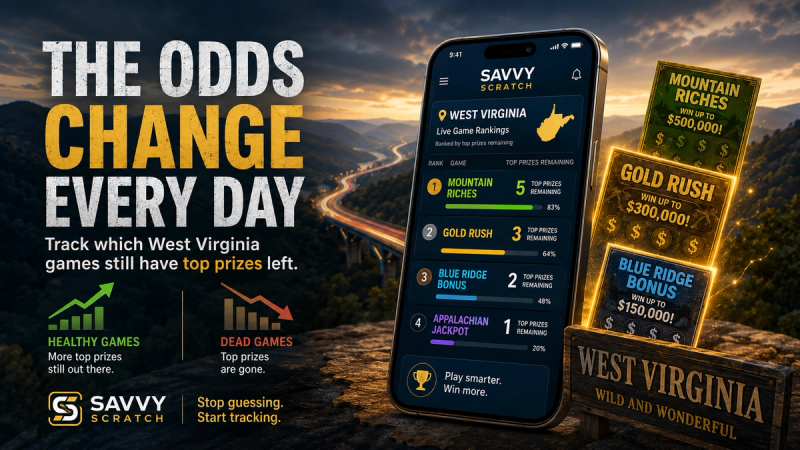
Here is the thing almost no casual player understands. When a game says "1 in 3.5," that is a fixed figure calculated at launch, before a single ticket was sold. It never changes. But the game absolutely changes. Every week, players claim prizes. Big winners get pulled off the board. And a game that launched with twelve $100,000 top prizes can quietly drop to two, or zero, while the retailer keeps selling those tickets at full price like nothing happened.
The odds on the back do not move. The actual value of the ticket in your hand moves every single day. I broke down exactly why that printed number is misleading in this piece on scratch-off odds, and it is worth reading if you have ever trusted that figure. West Virginia players now get the number that actually matters instead.
This is card counting, applied to lottery tickets
I spent years counting cards at blackjack tables. People think card counting is about memorizing which cards came out. It is not. It is about one thing: tracking how the composition of what is left changes the odds in front of you. A fresh shoe is a neutral bet. But as the small cards get dealt out and the deck fills up with tens and aces, the remaining cards start to favor the player. The count does not predict the next card. It tells you when the deck has quietly shifted in your favor, so you know when to raise your bet and when to sit on your hands.
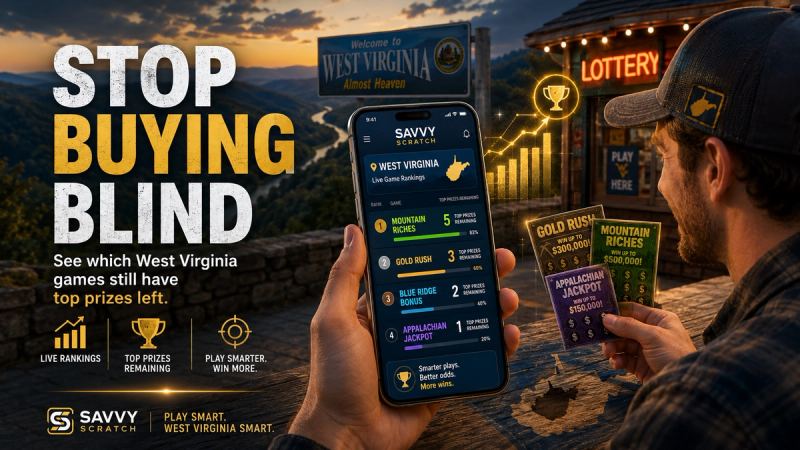
Scratch-offs work the exact same way. The "shoe" is the full print run of a game. As prizes get claimed, the composition of what is left changes. A game loses value when the top prizes get claimed but the losing tickets keep getting sold at full price. Savvy Scratch is the running count for West Virginia scratch-offs. It does not predict which ticket wins, because nobody can do that and anyone who says otherwise is selling you something. It tells you which games still have a favorable count and which ones the smart money already walked away from.
What you actually get in West Virginia
Open Savvy Scratch and you get a ranked shortlist of West Virginia games built around the questions a disciplined player asks:
- Which games still have top prizes left? A $50,000 game with zero grand prizes remaining is just an expensive way to win your money back. We flag those so you stop feeding them.
- How healthy is each game right now? You see the share of top and high-tier prizes still in circulation, not the launch-day fantasy number.
- What are today's best options? Instead of scanning a wall of forty tickets and guessing, you get a short list of the games with the strongest remaining value at each price point.
The data updates continuously as the West Virginia Lottery reports claimed prizes, so the picture you see reflects the game as it stands, not as it started. If you want a primer on how to read that data before you buy, start with how to read scratch-off odds before you buy a ticket.
The question nobody at the counter wants you to ask
There is a reason this matters. A retailer will happily sell you a $20 ticket from a game whose last top prize was claimed six weeks ago. In most places, that is completely legal, and the lottery has no obligation to tell you. I dug into that gray area in is it legal to sell scratch-offs with no top prize left, and the short version is: the burden is on you to know. Savvy Scratch exists so that burden takes about ten seconds instead of hours of digging through PDFs on the lottery website.
This is the same discipline that separates winning players from losing ones in every game I have ever played professionally. It is not about a magic edge. It is about refusing to make bets that have quietly turned bad while everyone around you keeps making them out of habit.
How to use it on your next trip
Before you head to the store, pull up Savvy Scratch and check the West Virginia list. Note the two or three games at your price point with the healthiest remaining top prizes. Skip anything showing zero grand prizes left, no matter how good the front of the ticket looks. Then buy with a plan instead of grabbing whatever the display pushes at eye level. That is the whole move. You are not chasing a system. You are just declining to play games that have gone cold, which is exactly what I would do at a table.
West Virginia joins a growing list of states where players stopped flying blind. If you have friends across state lines, we are live in a lot of places now, and the same logic travels everywhere the game is sold.
About the Author: Doug Moeller is a professional gambler with over 15 years of experience in poker, blackjack card counting, and casino advantage play, with over $500K in lifetime winnings. He built Savvy Scratch to bring the same data-driven approach that works at casino tables to scratch-off lottery tickets. Follow Doug on X | YouTube
Ready to stop guessing? Check the best West Virginia scratch-offs right now at SavvyScratch.com and see which games still have top prizes worth chasing before you spend another dollar.