Voting With Your Lottery Dollars: What California Election Day Teaches Scratch-Off Players
6/2/2026
By Doug Moeller | Professional Gambler & Founder of Savvy Scratch
Published June 2, 2026
California is voting today. Polling places are open across the state, lines are forming, and somewhere on the news right now a reporter is using the phrase "every vote counts." That phrase is half a cliché at this point, but it still happens to be true. A vote is a choice. It moves resources, attention, and outcomes in one direction or another. When you skip the research, default to whatever name you recognize, or just stay home, the result still gets decided. Your share of it just gets decided by other people.
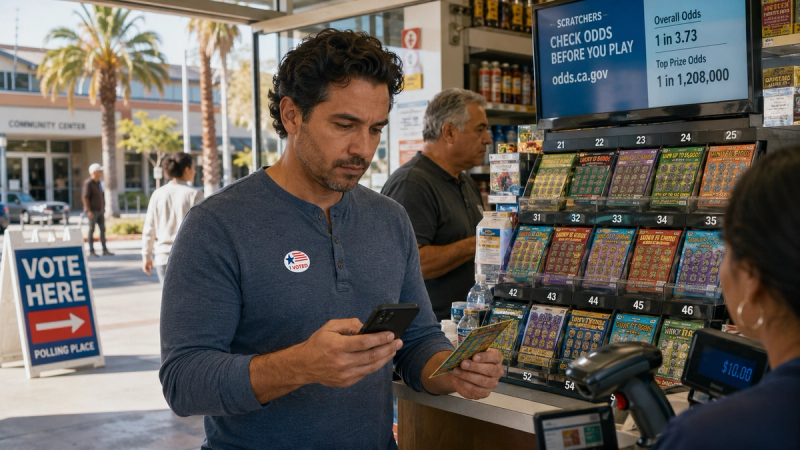
The lottery counter at the gas station works the same way. Every dollar you spend on a scratch-off is a small vote with your money. You are choosing which game you think deserves your stake. The lottery commission counts those votes in revenue, the same way an election counts them in ballots. And almost nobody walking into that gas station bothers to read what is actually on the ballot before they pick.
That gap, between an informed vote and a default one, is the entire reason a tool like Savvy Scratch exists. You can sign up free in about thirty seconds, see which games in your state are alive and which ones are gutted, and stop casting your dollar votes blind.
The Ballot Almost Nobody Reads
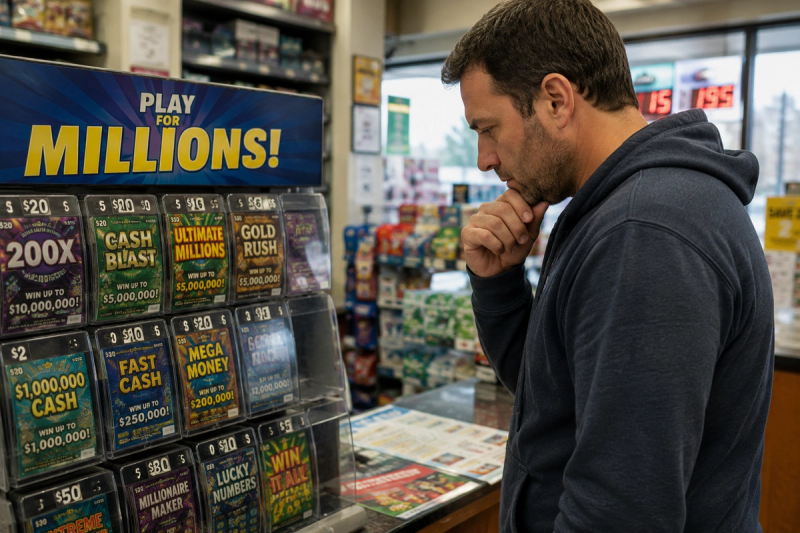
Walk into any California convenience store and look at the scratch-off rack behind the counter. Two or three dozen games on display. Bright art, fun names, prices from a dollar to fifty bucks. The packaging on every one of them implies a fair shot at what the marketing photo promised. The two million dollar headline. The car. The trip. The lifetime payout.
What the packaging will not tell you is that some of those games have already paid out most of their top prizes, and the unsold tickets are basically a stack of two and five dollar refund slips dressed up as a real game. Same price. Same photo. Different underlying math. The lottery commission is not in the business of slapping warning labels on depleted games. They sell tickets until the print run is finished, and the only thing standing between you and a bad vote is whether you bothered to look up the actual data before you put your money down.
This is identical to how civic ballots work. The information is published. Voter guides exist, sample ballots get mailed, the state lays it all out in plain text on a website. Most people still walk in and recognize one name out of seven and pick that one. The information was free. It was right there. They just did not look.
If you have read anything I have written before, you know I spent fifteen years making my living at poker tables, blackjack shoes, and a handful of casino games where the house gave up an edge long enough for somebody patient to take it. The single biggest predictor of whether I had a profitable session in poker was never how well I played the cards. It was which table I sat down at. Sit at a table full of pros and a winning player breaks even all night. Sit at a table full of weekend tourists and an average grinder makes money. Same cards, same rules, completely different outcomes. The poker pro obsesses over table selection because the math is decided before the first hand is dealt. The recreational player sits at the first open seat and orders a drink.
A scratch-off rack is a row of tables waiting for you to sit down. Most players sit at the first open seat. They are voting for a candidate they did not research, at a table they did not pick on purpose. Knowing your game before you reach the counter is the version of this fight you can actually win.
Your Dollar Vote Is Not Theoretical
There is a tendency among people who play scratch-offs casually to assume their individual ticket is too small to matter. One five dollar ticket, twice a week, what is the big deal. The math gets ugly fast if you actually run it. Five dollars, twice a week, fifty weeks a year, comes out to five hundred dollars in dollar votes you cast last year. That is real ballot weight.
Now ask the harder question. Of those five hundred dollars in votes, how many went to games where the data showed you a real shot at the top prize, and how many went to games whose top prizes were gone by month four? If you have never opened a state lottery prize report, never compared current odds against initial odds, never looked at any of it, the honest answer is you do not know. Which is the same as saying you do not know who you voted for.
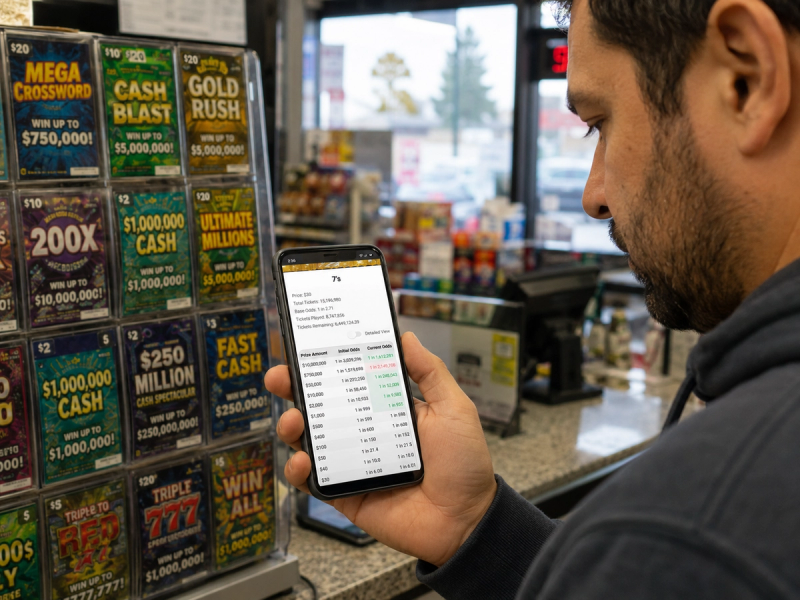
That is uncomfortable to sit with. It is also the entire point. I would rather you spend the next thirty seconds opening Savvy Scratch, looking at the Bad games tab for California, and noting which games on that rack you are about to walk past, than spend another ten dollars on a ticket you did not look up first. The Bad tab is free. Always has been. It is the cheapest civics lesson available for a scratch-off player.
Reading the Real Ballot
There are three numbers on any scratch-off that tell you whether your dollar vote is informed or guessed. Total tickets printed sets the scale. Tickets remaining tells you how mature the game is. Prizes remaining by tier tells you whether the math has drifted in the player's favor or against them since launch. That is the whole ballot. Once you can read those three numbers, every game in your state collapses into one of four buckets. Live. Dying. Dead. New.
Live games are the ones worth voting for. Their top prizes are still in the unsold inventory at a rate that matches or beats where the game started. Dying games still look normal at the counter, but the meaningful prize structure has been quietly hollowed out. Dead games are the husks the commission keeps selling because there is no reason for them to stop. New games are unproven, with no data drift yet, which means you are voting at face value.
If you want a longer walkthrough of how those numbers move, how jackpot ratios can make or break a scratch-off ticket choice breaks the math down without burying it in jargon. The TL;DR is that a game where forty percent of the tickets are sold and only ten percent of the top prizes remain is meaningfully worse than what the back of the ticket claims, and a game where the same forty percent of tickets are sold but half the top prizes are still in the pack is meaningfully better. Same printed odds. Two completely different votes.
Card counters at the blackjack table do not get to redraw the deck. They get to know what is left in it. When the small cards have already been dealt and the high cards are still on the way, the player's expected return moves in their favor and the disciplined counter raises his bet. When the small cards are still loaded, he keeps his stake at the table minimum and waits. Nothing about the rules of blackjack changes between those two situations. The composition of the remaining shoe is everything. A scratch-off game is exactly that. A closed shoe with a count that drifts as prizes get pulled. The current odds column in any decent scratch-off tool is the count, made readable for somebody who is not going to do the arithmetic at the counter.
Who Picks the Ballot If You Do Not
There is a related habit worth naming, since today is a day about choosing for yourself. A lot of recreational players walk up to the counter and ask the clerk what is hot. The clerk has no idea. The clerk processes hundreds of transactions, sees a handful of winners get cashed, and pattern-matches that into store folklore. Some clerks repeat it back as if they are sharing inside information. None of it changes what is actually inside the pack. Letting somebody else pick your lottery ticket is the lottery counter version of letting somebody at the polling place tell you who to vote for. They mean well. They are also guessing.
The cousin theory has the same problem. So does the favorite store. So does the lucky neighborhood. The myth of the lucky store is one of the most persistent ideas in lottery folklore, and it stays alive because somewhere, sometime, a clerk handed somebody a winning ticket. Stores that sell more tickets statistically also sell more winners. That is volume, not magic. The store is not on the ballot. The game is.
The other thing that quietly hijacks dollar votes is emotion. A losing week, a stressful day, a fight with somebody at home, and the brain wants a quick hit of possibility. So out comes the wallet, in the worst possible buying state, in front of the worst possible ballot. I have watched enough professional poker players lose months of careful work in a single tilted session to know that the most expensive money you will ever spend is the money you spend angry. Emotional buying is the lottery budget's worst enemy, and it is the one thing data cannot fix for you. The data will tell you which game is alive. The discipline part is yours.
If you happen to be voting in California today and are also a regular scratch-off player, the timing is actually useful. Make today the day you treat both ballots the same. Look up the names. Read the data. Decide on purpose. Try Savvy Scratch free and check what is actually live in California before your next stop at the gas station. The full Good and Neutral tabs run five dollars a month or fifty for the year, and there is a thirty-day worry-free guarantee on every subscription, so if it does not save you the price of admission in better game selection, send an email and get refunded. The Bad games tab is free forever.
Voting Day, Every Day
Election day is once or twice a year, depending on your state and the year's calendar. Lottery day is whenever you are standing in front of a rack with five dollars in your hand. That is the harder ballot to take seriously, because nobody is reminding you to. There are no signs out front. There is no polling place worker handing you a sample. There is just a clerk, a display case, and the bias your brain is bringing in the door with you.
The fix is not complicated. Look up the rack before you stand in front of it. Walk past the dead games no matter how good the photo looks. Pick the live one on purpose. Stay out of the store entirely on the days you are buying for the wrong reasons. That is the whole job. The data is free, the tool is free to start, and the only thing standing between you and an informed vote with your money is whether you bother to check.
California, if you are out there voting today, do the civic thing first. Then do the scratch-off thing the same way you did the civic thing. Open Savvy Scratch, pick California from the dropdown, and look at the best scratch-offs in California using real odds data. Five dollars a month gets you the Good and Neutral tabs. Fifty for the year if you want the discount. Thirty-day worry-free guarantee, so the downside is somebody else's problem.
Every dollar is a vote. Cast yours on purpose.
About the Author: Doug Moeller is a professional gambler with over 15 years of experience in poker, blackjack card counting, and casino advantage play, with over $500K in lifetime winnings. He built Savvy Scratch to bring the same data-driven approach that works at casino tables to scratch-off lottery tickets. The app currently covers 20 states. Follow Doug on X | YouTube