
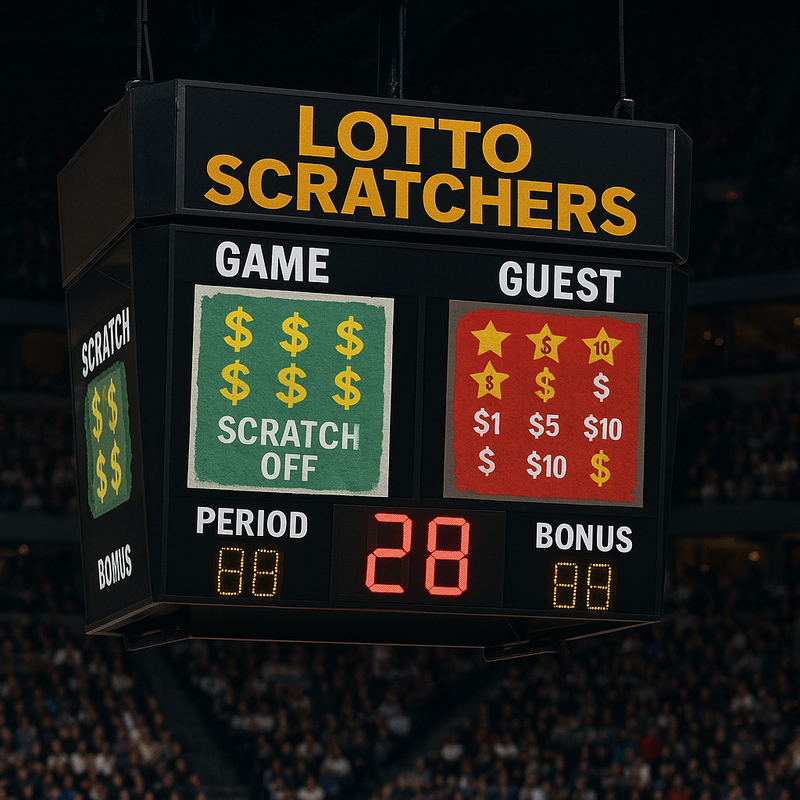
The Lottery Is the Only Game Where Most Players Never Check the Scoreboard
7/30/2025
By Doug Moeller | Professional Gambler & Founder of Savvy Scratch
Imagine sitting down at a poker table and the dealer says, "Good news, we're not going to show you the pot size. Just bet whatever feels right."
You'd walk away from that table. Anyone would.
Or picture watching a football game where the score is hidden. You don't know who's winning, who's losing, or whether your team just needs a field goal or a miracle. You're just... watching. Hoping.
That sounds insane. But it's exactly how millions of people play scratch-off lottery tickets every single day.
They walk into a gas station, grab a ticket based on the color of the packaging or because the cashier said "someone won on that one last week," and scratch away. No idea whether the jackpots are still available. No clue how many tickets have already been sold. Zero awareness of whether the game they're playing is still worth playing at all.
The scoreboard exists. The data is public. Most people just never bother to look.
I've spent 15+ years as a professional gambler. Poker, blackjack card counting, casino advantage play, over half a million dollars in lifetime winnings. And the single biggest lesson from all of it? The people who win consistently are the people who check the numbers before they play.
Let me show you what that looks like in the scratch-off world.
Why Most Scratch-Off Players Lose Money They Didn't Have to Lose
Every day, players walk into convenience stores and grab scratch-offs without asking a single question that actually matters.
They don't check if the top prizes have already been claimed. They don't look at how many tickets have been sold versus how many are left. They have no idea what the real jackpot odds are today, not on the day the game launched three months ago.
Instead, they're buying based on things that have absolutely nothing to do with their chances of winning. The ticket looks cool. It has their lucky number on it. The $30 ticket "feels" like it should pay out more. Or, my personal favorite, "that game hasn't hit in a while, so it's due."
That's not a strategy. That's just guessing with extra steps.
And it's the reason so many players burn through their scratch-off budgets without ever giving themselves a real shot at the prizes they're actually playing for.
If you've ever felt like you're just throwing money at the lottery counter, you're not imagining things. You might literally be playing games where the prizes you want are already gone. That's what a lottery ticket analyzer is designed to catch before you spend a dollar.
The Scoreboard Is Real, and It Updates Every Day
Here's what most scratch-off players don't realize: lottery games are not static.
The moment someone claims a jackpot, the entire game changes. When thousands of tickets get sold over a holiday weekend, the ratio of remaining prizes to remaining tickets shifts. The game you bought last Tuesday is a different game today, mathematically speaking.
The base odds printed on the back of the ticket? Those were calculated on launch day. They don't reflect what's happening right now. A game might say "1 in 3.84" on the back, but that number was true when 5.2 million tickets were in play. If 4.4 million have been sold and the top prizes haven't been claimed, the picture has changed dramatically.
State lotteries are required to publish this data. The number of remaining prizes at each tier, the total tickets in the game, the number of top prizes claimed. It's all out there.
The problem? It's buried across dozens of state lottery websites in formats that require actual math to interpret. Nobody's doing that at the gas station counter.
That's the whole reason I built Savvy Scratch. I needed a tool that did the math in real time, across every game in every state, so I could see the scoreboard before I played. Because in professional gambling, you never sit down at a table without knowing the odds. Scratch-offs shouldn't be any different.
How Shifting Odds Create Real Opportunities (and Real Traps)
Let me break this down with actual numbers, because this is where it gets interesting.
Say a game launches with 8 million tickets and 4 top prizes worth $5 million each. On day one, your odds of hitting a jackpot on any single ticket are roughly 1 in 2,000,000.
Now fast-forward a few months. Six million tickets have been sold. But all 4 jackpots are still sitting there, unclaimed.
Your new jackpot odds? Roughly 1 in 500,000.
Same game. Same ticket price. Same scratch-off you'd see at the counter. But the value of that ticket just improved by 4x, and nobody told you. Nobody's putting a sign on the display that says "hey, this game's odds just got way better."
Now flip it around. Different game, same $20 price point. Launched with 6 top prizes. Three months later, all 6 are claimed. The game is still on the shelf. People are still buying it. But there is a zero percent chance of hitting a jackpot on that ticket. It's a dead game walking.
Both games look identical in the store. Same shiny packaging. Same price. But one has dramatically improved jackpot odds, and the other is mathematically incapable of paying out the prize you're hoping for.
This is the scoreboard. This is what changes every single day. And this is what checking real-time scratch-off odds looks like in practice.
Card Counting Logic Applied to Scratch-Offs
If you've heard of card counting in blackjack, the concept is straightforward. As cards get dealt, the composition of the remaining deck changes. A card counter tracks those changes and adjusts their bets accordingly. When the deck is rich in high cards, they bet more. When it's not, they bet less.
Scratch-offs work on a similar principle, just on a different scale.
Every scratch-off game is a finite pool. There are X number of tickets printed and Y number of prizes distributed across them. As tickets get bought and prizes get claimed, the composition of the remaining pool changes. Sometimes it gets better for you. Sometimes it gets worse.
The difference between blackjack and scratch-offs? In blackjack, the edge is thin, maybe 1-2% at best. In scratch-offs, the jackpot odds can swing 3x, 5x, even 7x from launch day to late in a game's lifecycle. The swings are massive. You just need to know where to look.
That's the approach behind everything at Savvy Scratch. We pull prize data from state lottery websites across 15 states, calculate the current jackpot odds for every active game, and show you which games have gotten better and which ones have gone cold. It's card counting logic applied to a $100+ billion industry that most people treat like a coin flip.
What Smart Lottery Play Actually Looks Like
Serious scratch-off players aren't picking tickets based on color, name, or gut feeling anymore. They're treating each purchase like a decision, not a random grab.
That means checking a lottery jackpot tracker before buying anything to see which games still have top prizes available and how the current odds compare to launch day. It means using a lottery odds tool to identify games where timing has created better-than-average jackpot shots. It means avoiding dead games entirely, no matter how good the ticket looks.
You don't need a math degree. You don't need to visit 47 different lottery websites and build a spreadsheet. You just need to check the scoreboard.
The data is public. The math is straightforward. And once you see the difference between a game with 1 in 400,000 jackpot odds and a game with 1 in 4,000,000 odds sitting right next to each other on the same display, you can't unsee it.
Stop Guessing. Start Playing With the Numbers on Your Side.
The lottery isn't pure luck. It's a game with a finite pool of prizes, shifting odds, and patterns that reward the people who pay attention. That's not opinion. That's math.
If you want to give yourself a better shot at the prizes you're actually playing for, or at minimum stop wasting money on games where those prizes are already gone, you have to start treating it like what it is: a game with a scoreboard.
You wouldn't play poker without seeing the pot. You wouldn't watch the Super Bowl without the score. So why would you spend $20 on a scratch-off without knowing if the jackpot is even still there?
Check the data. Track the odds. And start making the lottery work for you instead of the other way around.
Savvy Scratch tracks every active scratch-off game across 17 states, showing you real-time jackpot odds, prize breakdowns, and game evaluations. Built by a professional gambler with 15+ years of experience. Plans start at $5/month or $50/year. See your state's best games right now.
About the Author: Doug Moeller is a professional gambler with over 15 years of experience in poker, blackjack card counting, and casino advantage play, with over $500K in lifetime winnings. He built Savvy Scratch to bring the same data-driven approach that works at casino tables to scratch-off lottery tickets. Follow Doug on X | YouTube