Why January Is the Best Time to Find Scratch-Offs with Better Jackpot Odds
1/3/2026
By Doug Moeller | Professional Gambler & Founder of Savvy Scratch
Every January, the same thing happens.
Holiday gift cards get spent. New Year’s optimism kicks in. Casual players who only buy a few times a year suddenly show up all at once and start firing at the wall.
Most people look at that and see more competition.
I look at it and see movement.
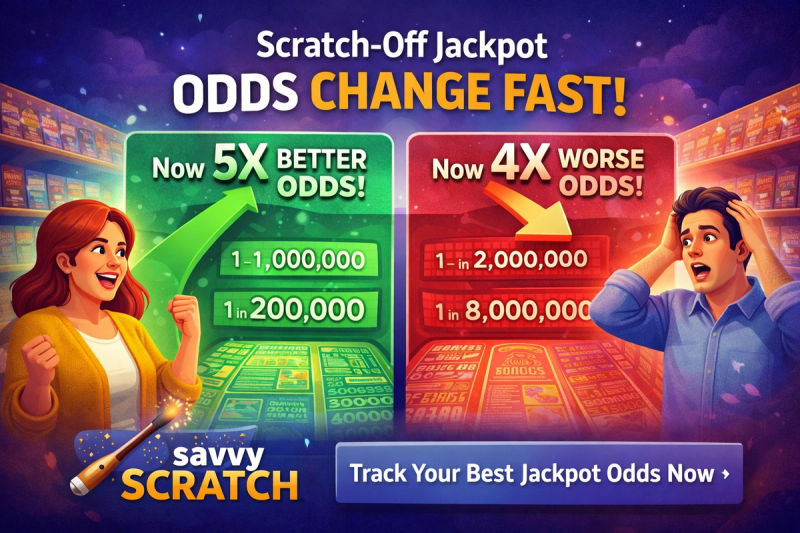
Because scratch-offs are not like Powerball. The odds do not stay frozen. They shift as games sell and prizes get claimed. And January is one of the few times of year when that shift can happen fast enough to matter in a real way.
That’s what most players miss.
They think January is just another month to buy a hopeful ticket and start the year with a little luck. And if that’s all you’re doing, fine. I wrote more about that in New Year’s Lottery Tickets: Are You Playing for Fun or Actually Trying to Win?.
But if you’re actually trying to give yourself the best shot at a jackpot, January is one of the few times when the board can move hard enough to create real separation between the games worth touching and the games you should leave alone.
That’s the window.
If you want to see that window before you buy, sign up for Savvy Scratch here.
Why January Changes the Board Faster
Every scratch-off game launches with a certain prize structure. A certain number of top prizes. A certain number of total tickets. A certain starting set of odds.
From there, the game starts moving.
Every losing ticket sold changes the composition of what’s left. Every jackpot claim changes it again. Some games improve because a lot of tickets move while the top prizes survive. Some games get destroyed because the jackpots get hit early. Most of the year, this process moves slowly enough that casual players never notice it.
January is different because volume jumps.
More people buying means the conditions can change much faster than usual. A game that looked average at the start of the month can suddenly look very interesting two weeks later if the ticket inventory drains while the top prizes stay alive. On the other hand, a flashy new game can get hammered immediately and become much worse before most people even realize it.
That’s the whole point.
January doesn’t magically make scratch-offs good. It just speeds up the conditions that separate the stronger opportunities from the weaker ones.
This Is Why Blind Buying Gets More Expensive in January
The average player does not respond to this by checking the data.
They respond by buying what’s new. Or what’s on the main display. Or what the cashier points to. Or the same game they always buy because it “feels lucky.”
That’s exactly how people miss the best spots.
The hot new ticket with the big marketing push is often the one absorbing the most money and the most attention. Meanwhile, an older game that nobody is talking about can quietly become much more attractive because the top prizes are hanging around while the ticket count keeps shrinking.
That’s not hype. That’s just how changing game conditions work.
If you’re still letting the wall make the decision for you, read Stop Letting the Cashier Pick Your Lottery Ticket. And if you keep buying the same game out of habit, read Playing the Same Ticket Every Time? Here’s Why That Might Be Costing You.
January punishes lazy habits faster than most months do.
What a Professional Gambler Sees in a Month Like This
I’ve won over half a million dollars across poker, blackjack card counting, and casino advantage play. And one lesson shows up in all of those worlds over and over again:
timing matters.
In poker, not every table is worth sitting in. In blackjack, not every shoe is worth betting into. In advantage play, you are constantly looking for moments where the conditions shifted enough to matter.
Scratch-offs are not a beatable game in the same way those can be. The house edge is still there. But the decision quality still changes depending on the moment.
That’s why January gets my attention.
Not because I think the lottery suddenly becomes soft. Not because I think people should go crazy buying tickets. The opposite, actually. January matters because it’s one of the cleanest examples of why timing matters at all.
Some games get better. Some get much worse. And if you never look, you never know which is which.
If you want the deeper version of how that gambling mindset carries over, read Why a Winning Gambler’s Playbook Works for Scratch-Offs. And if you want the mindset around skipping bad boards entirely, read Play Smart: Why Sitting Out Is a Winning Move (And How to Time Your Tickets).
The Part Most Players Still Get Wrong
A lot of people hear “January is a good time” and turn that into “buy more tickets in January.”
That is not what I’m saying.
The opportunity is not in playing more. The opportunity is in being more selective while the games are moving.
That means asking the only questions that really matter:
Are the top prizes still there?
How much of the game has already sold?
Has the jackpot picture improved or collapsed since launch?
How does this game compare to the other games at the same price right now?
That’s the real work.
And if you skip that work, you end up doing what most players do: buying into a game based on packaging while the actual math underneath it has already changed.
This is why Why Top Prizes Are the Only Thing That Actually Matters in Scratch-Offs is such an important piece. If the top end is gone or badly depleted, the rest of the conversation barely matters.
If you want the broader framework for comparing games, read Scratch-Off Tickets With the Best Odds: A Practical, Data-Driven Guide (and How Savvy Scratch Helps You Find Them).
Or skip the homework and create your Savvy Scratch account here.
The January Mistakes That Cost People the Best Spots
The first mistake is the gift-card trap.
Someone gets lottery money over the holidays, walks into a store the first week of January, and buys whatever looks exciting. No check. No comparison. No thought about whether the game already got hit hard. Just action.
The second mistake is assuming newer means better.
Sometimes it does. A lot of times it doesn’t. A newer game can be worse than an older overlooked game if the new one got crushed early and the older one kept its top structure alive.
The third mistake is loyalty.
A player won on a ticket in November, so they keep buying it in January like they owe it something. But scratch-off games are not relationships. Conditions change. A game that was worth a look six weeks ago can be a terrible buy now.
The fourth mistake is social pressure at the counter.
You’re already there. The clerk is waiting. The wall is in front of you. You don’t want to look indecisive. So you buy something instead of buying the right thing.
That’s how money leaks out.
If that sounds familiar, read The Hidden Mistakes Most Lottery Players Don’t Even Realize They’re Making and Knowing Your Game Before You Reach the Counter. Those two fit this post really well because they solve the exact behavior that January makes worse.
The Real January Strategy
You do not need a giant system.
You do not need spreadsheets.
You do not need to stare at lottery tables for an hour.
You need to know what the board looks like right now before you buy.
That’s it.
If a game has live top prizes, healthy current jackpot odds relative to launch, and it compares well inside your price tier, now you’re at least making a decision with your eyes open. If it doesn’t, skip it.
That’s the whole strategy.
January just makes this more valuable because the spread between the stronger games and the weaker ones can widen fast. One $20 ticket can be wildly better than another $20 ticket at the exact same moment, and most players will never know because they’re still buying based on display position and marketing.
Savvy Scratch fixes that. It shows you which games in your state still have something worth chasing before you ever step up to the counter.
If that sounds like overkill, read SavvyScratch Pricing: Why It Costs $5/Month (And Why That’s Actually Cheap). The entire point is that one avoided bad ticket can easily justify the subscription.
Or just sign up here.
What January Really Rewards
January does not reward optimism.
It rewards awareness.
It rewards the player who understands that game conditions are moving while everyone else is still buying like nothing changed.
It rewards the player who can ignore the shiny new display, ignore habit, ignore social pressure, and ask a more important question:
What are the numbers right now?
That is the difference between playing the lottery like a ritual and playing it with any actual discipline at all.
And in January, when the board is shifting faster than usual, that difference matters more than ever.
The Bottom Line
January is one of the best times to find better scratch-off jackpot odds because the games are moving fast and most players are still asleep at the wheel.
They’re buying what’s familiar. What’s flashy. What’s easy.
Meanwhile, the real opportunities often sit in the less obvious places: games that survived the rush, games whose top-prize picture stayed healthy, games that got better while everyone was chasing something else.
That’s the edge here. Not beating the lottery. Not pretending scratch-offs are a gold mine. Just refusing to buy blind when the conditions are changing right in front of you.
If you’re going to play in January, at least play with current information.
Because when the board is moving this fast, guessing gets expensive.
Check today’s best games and sign up for Savvy Scratch here.
About the Author: Doug Moeller is a professional gambler with over 15 years of experience in poker, blackjack card counting, and casino advantage play, with over $500K in lifetime winnings. He built Savvy Scratch to bring a data-driven gambling mindset to scratch-off lottery tickets so everyday players can stop guessing and start making better decisions.