
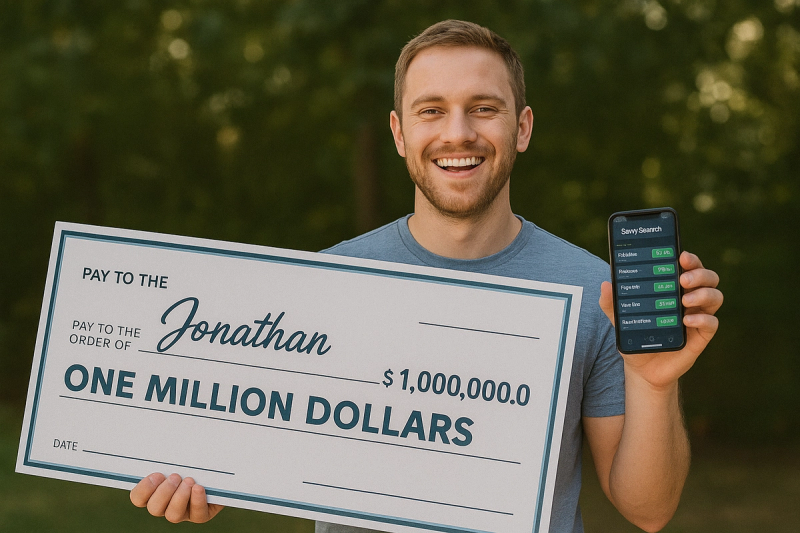
From Gut Feeling to Data-Driven: How Tech Is Changing the Way People Play the Lottery
7/23/2025
By Doug Moeller | Professional Gambler & Founder of Savvy Scratch
There's a moment every lottery player knows. You're standing at the counter, scanning the display case, and some combination of gut instinct and ticket design tells you which scratcher to grab. It feels like strategy. It isn't.
I've been playing games of chance professionally for over 15 years — poker tables, card counting in blackjack, casino advantage play. The difference between a recreational player and someone who actually wins over time isn't luck. It's information. The players who win consistently are always the ones working with better data than the person sitting next to them.
That same principle applies to scratch-offs. And in 2025, the tools to get that edge are finally available to anyone willing to use them.
Why "Playing Your Gut" Is Just a Polite Way to Lose Money
Let's be direct about something most lottery content won't say: picking scratch-offs based on design, superstition, or "which one feels right" is not a strategy. It's a donation.
The lottery is a math problem. Every ticket has a published prize structure. Every state publishes how many prizes remain at each tier. That data is public, updated regularly, and almost entirely ignored by the average player standing at the counter.
Think about it like a card game where half the deck is face-up on the table and your opponent won't look at it. The information is right there. The players who check it win more. Full stop.
This is the insight behind a data-driven lottery strategy — not magic, not pattern-matching, not predicting numbers. Just using the available information before you spend your money, the same way any professional gambler would.
Ready to see real-time odds before you buy? Start your free trial at Savvy Scratch and check which games in your state still have jackpots available.
What Real-Time Lottery Analytics Actually Shows You
The shift from gut instinct to strategy starts with understanding what lottery data actually tells you.
When a new scratch-off game launches, the full prize pool is intact. Every jackpot, every mid-tier prize, every small winner — all sitting there waiting to be claimed. As tickets sell, those prizes get claimed and removed from the pool. The odds shift. A game that started with a 1-in-800,000 chance at the top prize might drop to 1-in-200,000 after half the tickets sell — genuinely better odds for you, on that specific prize tier.
Conversely, some games keep selling long after every top prize has been claimed. Players keep buying tickets with zero chance at the jackpot, because there's no easy way to know the game is functionally dead. Unless you check.
Our guide to using an odds calculator walks through exactly how these shifts work — and why the odds printed on the back of the ticket are almost never the odds you're actually playing against at the moment you buy.
The three things real-time lottery analytics shows you:
- Which games still have unclaimed top prizes — so you're not buying into a dead game
- How current odds compare to launch odds — identifying where favorable shifts have happened
- How many tickets remain — so you understand the pool you're drawing from
That's it. No predictions, no systems, no psychic lottery algorithms. Just the publicly available data, organized so you can actually use it at the counter.
The Jackpot Hunting Mindset (It's Not What Most People Think)
When serious players talk about jackpot hunting, they don't mean chasing the biggest number on the ticket face. They mean timing.
Think of it like waiting for a good hand at the poker table. You don't play every hand — you wait for conditions to be favorable, then you move. Scratch-off ticket strategy in the data era works the same way: you identify games where the remaining prize pool relative to remaining tickets creates a genuinely better situation than average, and that's where you put your money.
Sometimes that's a newer game where all the prizes are still available and you're playing with full prize-pool conditions. Sometimes it's a mid-cycle game where a large number of $1,000+ prizes are still unclaimed. The data reveals both.
What this mindset specifically avoids is the worst habit in scratch-off play: buying the same game out of routine without ever checking whether that game still has anything meaningful left to win.
The complete guide to lottery analysis breaks down how to read prize structures across different game types and price points — worth reading if you want to understand the framework before you start applying it.
What a Lottery Analytics App Actually Does (And What It Doesn't)
There's a lot of noise in this space, so let me be straight with you.
No app predicts winning tickets. No software tells you which specific ticket in a roll is a winner. Anyone selling that idea is running a scam. The randomization in scratch-off printing is genuinely random within the prize structure — individual ticket outcomes can't be predicted.
What a good lottery analytics app can do is significant:
Surface the information you'd otherwise miss. State lottery websites publish prize data, but navigating that information across dozens of active games in real time is tedious. A good app aggregates it, ranks games by their current prize availability, and flags dead games immediately.
Show you odds shifts in context. A ticket that shows "1-in-500,000 odds for the top prize" on the back means nothing without knowing whether any top prizes remain. Real-time tracking shows initial odds alongside current odds so you can see which direction they've moved.
Help you compare across your state. If you're in Texas and there are 80 active games, which ten are worth considering today? That's what the app answers quickly, so you're not doing manual research every time you want to play.
Alert you to new releases. Brand-new games have 100% of their prize pool intact. Some players specifically hunt new releases for exactly this reason — you're playing against an untouched prize structure. An analytics tool flags these immediately.
The benefits of using a scratch-off app covers this in more depth, including how to actually build this into your regular playing routine rather than treating it as a separate research project.
See what games are live in your state right now. Check Savvy Scratch for real-time odds updates across all active games.
The Five Habits That Separate Data-Driven Players From Everyone Else
After 15 years in professional gambling, the behavioral patterns that separate winners from losers are pretty consistent across games. Here's how they translate to scratch-off strategy:
1. They check before they buy, every time. This sounds obvious but almost nobody does it consistently. Takes 30 seconds. Tells you whether the game you're about to spend $20 on has any remaining top prizes. The players who build this habit stop buying into dead games almost entirely.
2. They track their own play. Not obsessively, just enough to know their results by game type, price point, and state. Patterns emerge that are specific to how you play. Some people do better with lower-price, high-volume play. Others do better concentrating spend on fewer higher-priced tickets with better base odds. You can't know which without tracking.
3. They set a budget and treat it as entertainment. This isn't about gambling addiction prevention advice — it's about having a defined bankroll so you're not making decisions from a position of chasing losses. Every serious gambler operates from a bankroll framework. Scratch-off strategy is no different.
4. They understand the difference between good odds and good timing. A game with great base odds that launched six months ago might be a worse play than a game with average base odds that just launched yesterday. The prize pool condition matters as much as the printed odds.
5. They ignore the ticket design. I know this sounds obvious but stand at a lottery display for five minutes and watch how many purchasing decisions get made based on which ticket looks the most appealing. Design is marketing. The data is the strategy.
A Note on Expectations (Because This Is a Gambling Game)
I want to be honest with you about something, because too much lottery content isn't.
Data-driven scratch-off strategy doesn't make you a winner in the absolute sense. The odds are still unfavorable in aggregate — every lottery is designed to pay out less than it takes in. What strategy does is improve your position within that unfavorable system by avoiding the worst plays (dead games, depleted prize pools), concentrating your spend where the conditions are meaningfully better, and making decisions based on information rather than impulse.
Think of it like this: a card counter in blackjack still loses individual hands. The math of the game still grinds against them on most sessions. But over time, the edge from using information correctly creates a meaningfully different outcome than playing without it. The same framework applies here, scaled appropriately to the scratch-off context.
The goal isn't guaranteed wins. It's making smarter decisions with the money you're already going to spend on lottery tickets.
The Tech-Powered Era of Scratch-Off Play Is Already Here
Here's the honest competitive situation: a meaningful percentage of scratch-off players are already using real-time data to make their picks. State lottery data is public. Tools to aggregate and analyze it exist. The players using those tools are making better decisions than the players who aren't.
If you're still picking tickets based on which design catches your eye, you're at an informational disadvantage relative to players who've already made the switch to a data-driven approach. That gap is only going to grow as these tools get more sophisticated.
The good news is that switching is genuinely simple. You don't need to become a statistics expert. You don't need to do manual research across state lottery websites. You just need to spend 30 seconds checking a reliable source before you buy.
That's the upgrade. That's the whole thing.
Start Playing With Real Data Today
The shift from gut feeling to data-driven lottery strategy isn't complicated. It's just a habit change — from buying what looks good to buying what the numbers support.
Savvy Scratch tracks real-time scratch-off odds across multiple states, shows you which games still have unclaimed jackpots, and flags dead games before you waste money on them. It's the tool built specifically for the kind of data-informed play this entire post has been about.
Check out Savvy Scratch now and see exactly which games in your state are worth playing today — and which ones aren't.
Because the data is available. The only question is whether you're using it.
Doug is the founder of Savvy Scratch and a professional gambler with 15+ years of experience in poker, card counting, and casino advantage play. He built Savvy Scratch to bring the same data-driven decision making he uses at the casino table to scratch-off lottery play.