
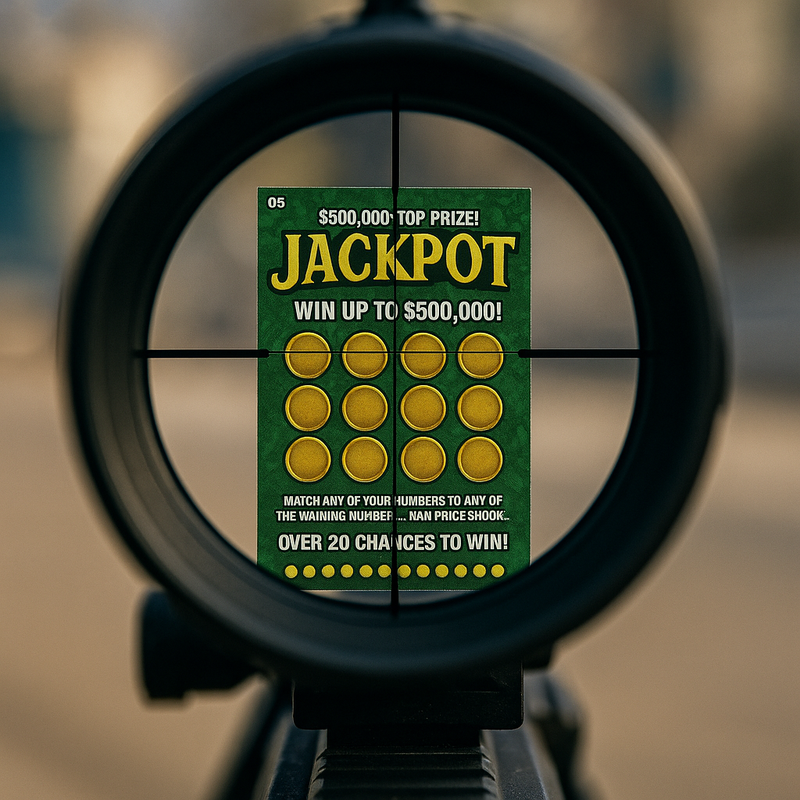
Beginner’s Guide to Lottery Jackpot Hunting
7/15/2025
By Doug Moeller | Professional Gambler & Founder of Savvy Scratch
Jackpot hunting sounds like something only hardcore gamblers do, but it's actually a strategic approach any lottery player can use to find better odds and smarter plays. If you've been buying scratch-offs based on gut feeling or lucky numbers, this guide will show you a different way—one that's based on math and timing instead of hope.
I've spent 15+ years grinding out profits in poker rooms and casino pits, and the principle is always the same: find the spots where the math favors you, even slightly, and play those spots consistently. Jackpot hunting applies that exact framework to scratch-off lottery tickets. In this post, I'll break down how jackpot odds shift over time, how to evaluate a game's current value, and what data to track if you want to play smarter instead of harder.
What Jackpot Hunting Actually Means
Jackpot hunting is the practice of seeking out lottery tickets—especially scratch-offs—where the odds of hitting a top prize have improved since the game launched. These are tickets where the jackpot is still available, a decent number of prizes are unclaimed, and the game is far enough into its print run that you can identify patterns in how prizes are being claimed.
This strategy isn't based on luck. It's based on timing and math. You're not trying to predict which ticket will win. You're trying to identify games where the current odds are better than the printed odds, and then playing those games instead of the ones where odds have gotten worse.
Most players never think about this. They walk into a store, grab whatever looks good, and hope for the best. Jackpot hunters do the opposite—they check the data first, then decide which games are worth playing.
How Jackpot Odds Shift Over Time
Here's what most people don't understand about scratch-offs: the printed odds on the ticket are based on the entire population of tickets when the game launches. But once a ticket is released and people start claiming prizes, the real odds begin to shift. Those printed odds become outdated almost immediately.
Let me give you a concrete example. Say a game launches with 8 million tickets printed and 4 top prizes available at launch. Your starting odds of hitting that jackpot are 1 in 2 million. Now imagine that 3 of those jackpots get claimed, but only 2 million tickets have been sold. That means 75% of the top prizes are gone, but only 25% of the tickets have been played. Your odds just got significantly worse than what's printed on the package.
But the opposite can also happen. Imagine 1 jackpot gets claimed out of 4, and 6 million tickets have been sold. That means 3 jackpots are still out there, with only 2 million tickets remaining in circulation. Your odds just improved dramatically compared to launch day. That's jackpot hunting in action—identifying when the odds have shifted in your favor and playing those games instead of the ones where odds have deteriorated.
This is why understanding how odds calculators work is so important. You need to know the current odds, not just the printed odds. Otherwise, you're making decisions based on stale information.
How to Spot Value in a Scratch-Off Game
Smart jackpot hunters look at several data points before buying a ticket. Total tickets printed defines the base odds of the game—it's the starting point for everything else. Remaining top prizes shows what's still available to win, which is critical because if all the jackpots are gone, there's no reason to play that game at all. Claimed prizes help you estimate how far along the game is in its lifecycle. Game release date matters because older games may have fewer prizes left, but they also give you more data to analyze and make better decisions.
Second-chance entry adds bonus utility, especially on losing tickets. Some states run second-chance drawings where you can enter non-winning tickets for another shot at prizes. If a game offers that, it changes the expected value calculation even on tickets that don't win the first time.
You can try to find all this data manually from state lottery websites, but it takes time and spreadsheets. You're constantly checking for updates, running calculations, and comparing games to figure out which ones are worth playing. Most players don't have the time or patience for that, which is why they keep playing blind.
Try Savvy Scratch risk-free for 30 days →
Why New Games Aren't Always the Best
There's a common belief that newer tickets are better because "no one's played them yet." Sometimes that's true, but it's not a rule you can rely on. New games can sell fast, leading to fast jackpot claims. They can have worse prize structures than older games that have been proven over time. And they often attract more hype than actual value, which means you're competing with a flood of other players who all had the same idea.
Some of the best plays come from slightly older games where jackpots are still live but player attention has shifted elsewhere. These are games where the crowds have moved on to the next shiny thing, but the math still favors you because prizes haven't depleted as fast as ticket sales.
Always check the remaining prize pool, not just the release date. That's the difference between playing with strategy and playing with hope.
Tools to Help You Hunt Smarter
If you're doing this manually, you'll need a spreadsheet to track all games in your state, daily visits to your state lottery site to check for updates, and time to crunch numbers and filter based on changing odds. That's a lot of work, and most people quit after a week because it's tedious.
Or you can use a tool that does it for you. Savvy Scratch tracks all ticket games in your state daily, flags games with improved jackpot odds, lets you filter by best odds and jackpot availability, and alerts you when new games drop. No more spreadsheets. No more guessing. You pull up the app, see which games have value, and make your decision based on real data instead of whatever looks good at the counter.
This is the same approach professional gamblers use in casinos—find the edge, exploit it consistently, and don't waste money on bad bets. Learn more about lottery analysis tools here.
Why Savvy Scratch Exists
I built Savvy Scratch because I got tired of watching players waste money on tickets that had no jackpots left. I've spent over 15 years playing poker professionally, counting cards at blackjack tables, and finding advantages in casino games. The math is always the same—you can't beat randomness, but you can play into better conditions when they exist.
With Savvy Scratch, you'll always know which games still have jackpots left, which odds have improved since launch, and which tickets to skip entirely. Instead of burning money guessing, you play with a data edge. It's like having a professional gambler in your pocket who's already done the math for you.
Start playing with data instead of gut feelings →
Final Thoughts
Jackpot hunting isn't luck. It's logic. By tracking what's been claimed and comparing it to what's left, you can avoid bad plays and zero in on better ones. You won't win every time—no one does. But you'll stop wasting money on tickets where the jackpots are already gone, and you'll start playing games where the odds actually justify the price.
Start playing with strategy instead of superstition, and turn the odds just slightly more in your favor. That's all it takes.
About the Author: Doug Moeller is a professional gambler with over 15 years of experience in poker, blackjack card counting, and casino advantage play, with over $500K in lifetime winnings. He built Savvy Scratch to bring the same data-driven approach that works at casino tables to scratch-off lottery tickets. Follow Doug on X | YouTube