Smart Lottery Gaming: The Future of Scratch-Off Strategy
7/10/2025
By Doug Moeller | Professional Gambler & Founder of Savvy Scratch
Most lottery players pick scratch-offs the same way people grab cereal off a shelf.
Whatever catches their eye.
The flashy one. The new one. The one with the loud colors. The one the clerk points at because it’s right there.
Then they scratch it, lose, and tell themselves luck just wasn’t on their side.
That’s the part I disagree with.
Because with scratch-offs, luck is only part of the story. The bigger issue is that most players are making bad decisions before the ticket is even in their hand.
I’ve spent over 15 years in professional gambling, from poker to blackjack card counting to casino advantage play, and one thing never changes: if you understand the structure of the game better than the average player, you make better decisions than the average player. Scratch-offs are no different. The specific outcome on one ticket is still random. But the quality of the game you choose is not. That depends on whether you’re using real information or just buying off vibes.
If you want to sign up free, see the bad games and new games in your state, and stop buying blind, try Savvy Scratch free here.
Scratch-Offs Are Not the Same as Powerball
This is where people get mixed up.
Draw games like Powerball or Mega Millions reset. Once the drawing happens, it’s over, and the next drawing starts fresh. The odds do not depend on what happened last week.
Scratch-offs do not work like that.
Scratch-offs are dependent games. They launch with a fixed number of tickets and a fixed number of prizes. Then tickets start selling. Prizes start getting claimed. And the condition of the game changes over time.
That means a scratcher can be a decent buy at launch, a terrible buy three months later, and a strong buy again in a different scenario where enough tickets sold but the top prizes held up.
That is the part most players never think about.
And it’s exactly why Scratch-Offs Aren’t Just Luck — They’re Built Like Strategy Games is such a natural companion piece here. If you understand that post, this whole article makes a lot more sense.
The Future Is Not More Luck. It’s Better Information
The future of scratch-off play is not some secret system.
It’s not lucky numbers.
It’s not buying from a “hot” store.
It’s not waiting for a roll to be due.
It’s information.
That’s the real shift.
For a long time, most players treated scratch-offs like they were just random impulse buys with no meaningful difference between one game and another. But once you start looking at the data, that whole mindset falls apart. Some games still have real top-end life in them. Some are badly depleted. Some quietly improve over time. Some are dead and still sitting on the shelf pretending they’re worth your money.
That is where smart lottery gaming starts.
Not with magic.
With clarity.
The Number That Matters Most Is Jackpot Availability
A lot of players get distracted by the wrong odds.
They see the overall odds printed on the back of the ticket and think that tells the whole story. It doesn’t.
Those overall odds include all the little stuff: break-even tickets, tiny prizes, free plays, whatever filler sits in the prize structure. And more importantly, those numbers are based on the launch version of the game, not the game as it exists right now.
What really matters to most people is much simpler:
How many top prizes were there at launch?
How many are still there now?
And how much of the game is still out there?
That’s why Why Top Prizes Are the Only Thing That Actually Matters in Scratch-Offs fits so cleanly into this piece. Because if the top end is gone, then the dream that pulled you in is gone too.
And if you’re buying a ticket for the shot at something life-changing, that matters a lot more than the ticket design.
Dead Games Are the Trap Most Players Never See
This is one of the most expensive blind spots in the whole scratch-off world.
A game can still be sitting behind the counter, still be fully legal to sell, still have the giant jackpot number printed on the front, and still have zero top prizes left.
That means the version of the game in your head and the version of the game in reality are not the same thing anymore.
That is crazy if you stop and think about it.
But it happens all the time, and most players never catch it because they never check the prize data first. They see the big number. They assume the prize is still available. They buy.
That’s exactly the kind of problem The Lottery Sells You the Dream — But Hides the Math gets at. The ticket is there to sell the fantasy. The data is what tells you whether that fantasy still exists.
If you want an easier way to filter that out, you can sign up free for Savvy Scratch, see the bad games and the new games, and stop wasting money on games that are already past their prime.
Timing Matters More Than Most Players Realize
A lot of people still assume a ticket is basically the same from the day it launches until the day it disappears.
That is not true.
Timing matters because the prize pool moves.
A game can get worse fast if jackpots get hit early. A different game can quietly get much better if losing tickets keep selling and the big prizes stay alive. That’s where a lot of the hidden opportunity lives. Not in guessing. In timing.
That’s why The Data-Driven Approach to Lottery Jackpot Hunting: How to Track, Strategize, and Win Smarter and Why Better Lottery Odds Actually Mean Less Waiting Between Jackpots fit this topic so well. Smart lottery gaming is really just getting better at recognizing when a game’s current condition is meaningfully different from what the casual player assumes.
That’s the future.
Not more playing.
Better timing.
This Is What Makes Scratch-Off Strategy Real
When people hear “strategy,” they often imagine something goofy or superstitious.
That’s not what I mean.
I mean checking the game before you buy it.
I mean knowing whether the jackpots are still live.
I mean knowing whether the game improved or collapsed since launch.
I mean comparing two tickets at the same price point and realizing one gives you a far better current shot than the other.
That is real strategy.
And it’s exactly why Lottery Data: How to Use Numbers to Spot Winning Tickets and Best Scratch-Off Tickets: What Data Tells You About Your Odds are such strong companion reads. Both are live on your blog and both make the same point in slightly different ways: the players using data are playing a different game than the ones buying blind.
What Smart Lottery Gaming Is Not
This matters.
Smart lottery gaming does not mean you beat the lottery.
It does not mean you guarantee wins.
It does not mean the house edge disappears.
It does not mean the ticket you buy is “the one.”
It just means you stop making obviously weaker decisions.
That’s a huge difference.
And it’s one reason 13 Lottery Myths That Are Draining Your Wallet (And What to Do Instead) belongs naturally in this article too. Most players don’t need more theories. They need fewer bad assumptions.
Better Tools Change the Way People Play
This is where I think the category is headed.
For a long time, scratch-off players were stuck doing one of two things: buying blind or digging through awful lottery pages and trying to do the math manually.
That gap is what better tools fix.
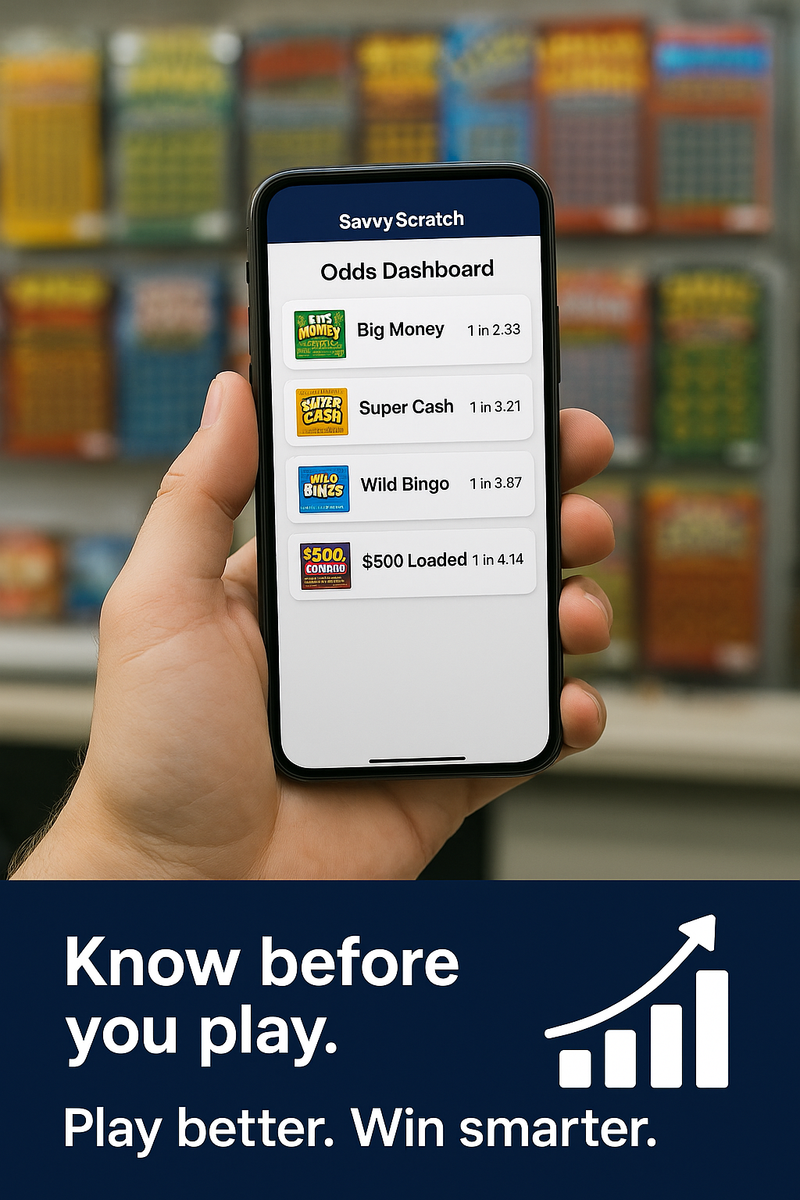
A smarter tool should help you see which games are live, which ones are bad, which ones are new, and which ones have the strongest current conditions right now. Not after you scratch. Before you buy.
That’s the difference between a basic lottery app and an actual scratch-off decision tool.
That’s why I built Savvy Scratch around current prize conditions instead of just ticket scanning. If the whole point is to play smarter, then the product has to help before the money moves.
If you want that version, Savvy Scratch is free to try. You can sign up free, see the bad games and new games, and get a much cleaner view of which scratch-offs in your state are actually worth your attention.
The Real Shift
The real shift is not technological.
It’s mental.
Players are slowly starting to realize that scratch-offs are not just “grab one and hope.” They are starting to understand that game condition matters. That top prizes matter. That timing matters. That data matters.
That is smart lottery gaming.
Not because it turns the lottery into some magical beatable machine.
Because it stops you from acting like every ticket on the wall is basically the same when it clearly is not.
That’s a much better way to play.
About the Author: Doug Moeller is a professional gambler with over 15 years of experience in poker, blackjack card counting, and casino advantage play, with over $500K in lifetime winnings. He built Savvy Scratch to bring the same data-driven approach that works at casino tables to scratch-off lottery tickets. Follow Doug on X | YouTube