Responsible Gambling Starts With a Plan: How Scratch-Off Players Stay In Control
4/10/2026
By Doug Moeller | Professional Gambler & Founder of Savvy Scratch
Lottery games are supposed to be entertainment. The problem is that a lot of players are not really treating them that way.
They are buying when they are frustrated. Buying when they are chasing a loss. Buying because the jackpot number printed on the ticket looks exciting. Buying without knowing whether the game is fresh, depleted, or already in bad shape. That is where trouble starts.
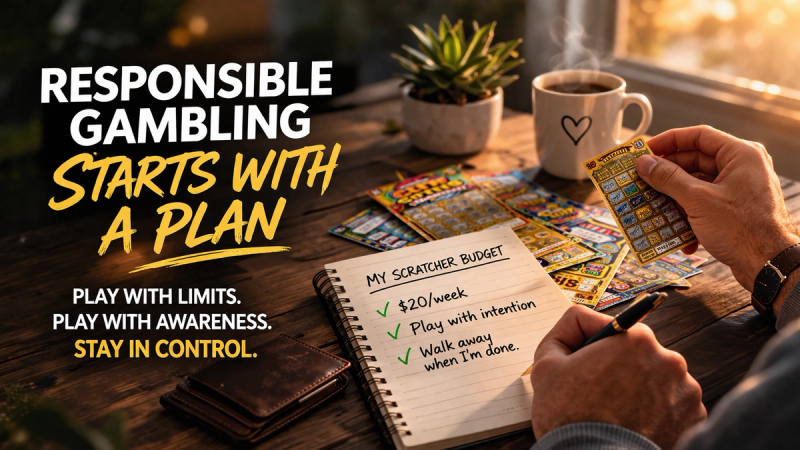
Responsible gambling is not just about spending less money. It is about staying in control. It is about making sure a game never starts making decisions for you. If you are going to play scratch-offs, the smartest move is simple. Play with limits, play with awareness, and never confuse hope with a strategy.
I have spent more than fifteen years as a professional gambler across poker rooms, blackjack tables, and casino advantage play, and the single biggest lesson from that whole career is this. Discipline is not the thing that happens after you lose control. Discipline is the thing that prevents losing control in the first place. Every smart player I have ever met installs the rules before the session starts, not halfway through it.
What Responsible Gambling Actually Means
Responsible gambling means you decide the rules before you play. Not during the session. Not after a loss. Not when you feel tempted to win it back. Before.
That can mean setting a weekly scratcher budget. It can mean only playing with entertainment money. It can mean walking away when you hit your limit. It can also mean deciding not to play at all when you are stressed, emotional, or tight on cash.
A lot of people think responsible gambling is just a disclaimer that lottery commissions slap on the bottom of an ad. It is not. It is a real standard for behavior. It means never risking money you need for bills, never treating gambling like income, never chasing losses, never borrowing money to play, and never hiding what you are spending from the people close to you. It means knowing the moment a session stops being fun and having the self-respect to walk away from that moment without arguing with yourself about it.
That is the line. If the activity stops being entertainment and starts becoming pressure, compulsion, or escape, something is off.
Why Scratch-Offs Feel Harmless Until They Are Not
Scratch-offs do not always feel like real gambling to people. There is no casino floor. There is no poker table with dealers and pit bosses. There is no sports betting app lighting up your phone. It is just a ticket at the gas station. A quick buy at the grocery store. A few bucks at the counter on the way out.
That low-friction feeling is exactly why people can drift into bad habits without noticing. Small purchases add up fast when they become automatic. A player might tell themselves it is only ten bucks, it is just for fun, one more will not matter. That kind of quiet, unchallenged self-talk is how a casual habit turns into repeated, unplanned spending.
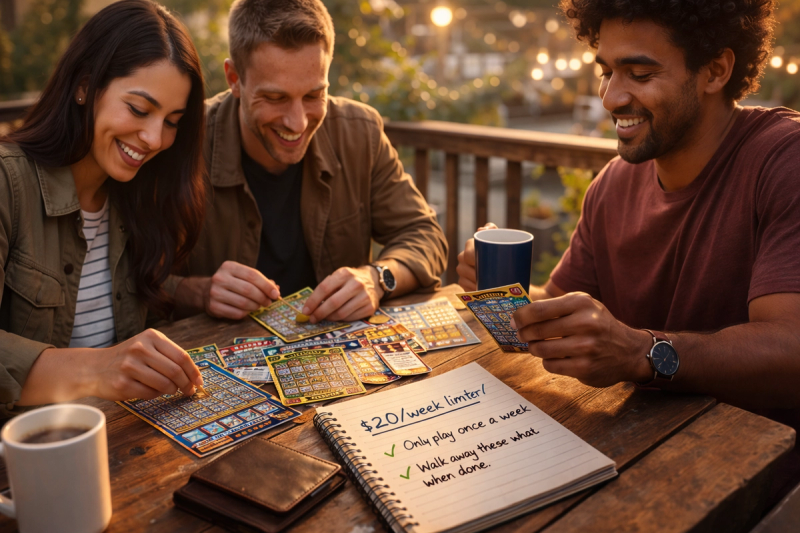
Responsible gambling means paying attention to patterns, not just individual purchases. If you want to see the framework behind this kind of clarity, The Truth About Lottery Odds breaks down why the numbers most players rely on are already stale the moment they are printed.
Stop buying scratch-offs blind. Savvy Scratch shows you which games still have real top prizes and which are already played out across nineteen states. $5/month or $50/year, backed by a 30-day worry-free guarantee. Start here.
The Bankroll Rule I Learned at the Poker Table
Here is the first pro gambling lesson that applies directly to scratch-off players. Every serious poker player I have ever respected runs a bankroll. Not a vibe, not a guess, not a mental estimate that moves around depending on how the week is going. An actual number, set in advance, treated as sacred.
The rule most of us used was some version of never risk more than a fixed percentage of your total playable money in a single session. If the number said you had two hundred for the week, you had two hundred for the week. Losing the two hundred did not mean the bankroll owed you a comeback. It meant the session was over and you went home. Winning early did not mean the rules loosened. It meant the session was over and you went home with a profit.
That same discipline is what keeps a scratch-off habit from drifting into something unhealthy. Pick a number before you play and respect it. A real budget sounds like I spend twenty dollars a week, maximum, or I only play once a month with whatever I set aside. Vague intentions like I will try not to spend much are not budgets. They are wishes. And wishes lose money.
Chasing Losses Is Just Tilt in a Different Outfit
Here is the second pro gambling lesson, and it is the one that wrecks more players than anything else. In poker, we call it tilt. Tilt is what happens when a player takes a bad beat, gets irritated, and starts making decisions off emotion instead of math. Tilt is the single most expensive state of mind in professional gambling. I have watched talented players burn through months of profit in a single night because they refused to stand up from the table while they were upset.
Chasing losses at a scratch-off display is the exact same disease. You lose on a few tickets, you get frustrated, and you buy more because you want to get even. That is not strategy. That is emotion writing checks your bankroll cannot cash. The lottery does not owe you a correction because you just lost. The next ticket does not know about the last ticket. There is no momentum, no comeback narrative, no cosmic ledger balancing out. There is just more spending into the same conditions that did not work the first time.
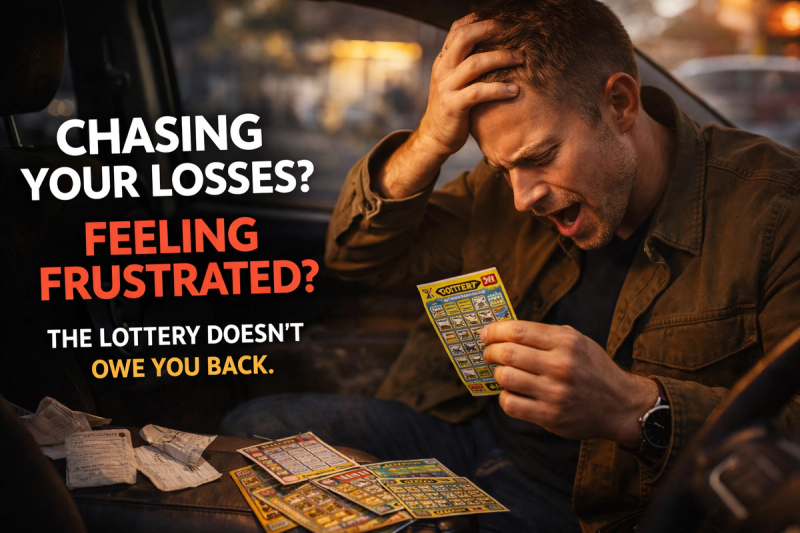
The only correct response to a losing session is to end the session. Walk away, come back another day with a fresh head and a fresh plan. Anyone who tells you otherwise is selling you something.
The Biggest Quiet Mistakes
Most gambling problems do not start with recklessness. They start with bad assumptions that never get questioned.
A common one is treating a small win as proof that you are hot. A fifty-dollar hit feels like momentum. It is not. Scratch-offs do not care what happened on your last ticket. The game is finite, the prizes are predetermined, and a win does nothing to improve the next purchase.
Another one is playing blind, which is different from playing unlucky. Playing blind means buying based on ticket artwork, store superstition, what the cashier handed you, or whichever game is sitting at eye level. That is not a decision. That is surrender. You cannot control the outcome of a scratcher, but you can absolutely control whether you buy with information or without it. Stop Playing Blind walks through exactly what that awareness looks like in practice.
And the quietest mistake of all is playing when emotional. Angry, lonely, stressed, bored, discouraged. Those are the worst possible conditions to make any financial decision, let alone a gambling one. When scratch-offs become an emotional outlet, they stop being entertainment almost immediately. The psychology of that drift is exactly what The Hidden Mistakes Most Lottery Players Don't Even Realize They're Making digs into.
A Smarter Way to Think About the Games
You cannot guarantee a win. You cannot force luck. You cannot magically turn a negative expectation game into something risk-free. What you can do is reduce avoidable mistakes. That is what responsible gambling actually is. Not pretending the games are safe, but cutting out the decisions that have nothing behind them.
For scratch-off players, that looks like a handful of simple habits. Set a real number before you play. Never put rent money, grocery money, debt payments, or family money in play under any circumstances. If you lose, the session is over, full stop. Take breaks the moment you feel yourself getting irritated or compulsive. Use information before you spend. And remember that not playing is always allowed. This last one matters more than people think. You do not need to force action. Sometimes the smartest gambling decision of the week is no decision at all.
If you want the longer breakdown of what separates informed decisions from blind ones, How to Use an Odds Calculator to Pick Better Scratch-Offs is worth a read.
Want to know which games in your state are worth buying before you get to the counter? Savvy Scratch tracks live jackpot data daily across nineteen states for $5/month or $50/year, with a 30-day worry-free guarantee. See today's best games.
Where Savvy Scratch Fits Into This
Let me be clear about what Savvy Scratch is and what it is not. It is not a promise of winning. It is not a secret system. It is not a reason to overspend or buy more often. It is a tool meant to help players avoid making blind decisions at the counter.
That distinction matters a lot. A responsible gambling mindset is not how do I gamble more, it is how do I stay disciplined, avoid the bad choices, and make better-informed ones when I do decide to play. Good tools help you slow down, think clearly, and avoid waste. They should never push urgency, impulse, or fantasy.
If a game looks bad, you should be able to say no. If a game is freshly launched, you should know that before you spend. If the data says a game is not worth your money, walking away is the smart move, not the disappointing one. That is what responsible behavior looks like in practice. For a deeper look at why the top prize situation on a game is the single most important piece of information you can have, Why Top Prizes Are the Only Thing That Actually Matters in Scratch-Offs is the next read.
Warning Signs Worth Taking Seriously
Be honest with yourself here. If any of these patterns are happening regularly, it is time to step back. Spending more than you planned. Hiding how much you are spending from the people who live with you. Gambling to fix stress or improve your mood. Feeling upset or restless when you cannot play. Constantly trying to win back losses. Gambling causing arguments or financial pressure at home. And the big one, the quietest one, gambling that no longer feels fun but that you keep doing anyway out of momentum.
Noticing any of those does not make you weak. It means you are paying attention, which is the part most people skip. The earlier you deal with it, the easier it is to reset. We take this seriously enough that we keep a dedicated Responsible Gambling page with resources and support information. If you or someone you know needs immediate help, the National Council on Problem Gambling runs a confidential helpline at 1-800-GAMBLER, available twenty-four hours a day.
The Real Goal
The goal is not to become the perfect gambler. Nobody is the perfect gambler. The goal is to stay in control. For some people, that means strict limits. For some people, that means occasional entertainment only. For some people, that means taking a full break and coming back later, or not coming back at all. Every one of those is a valid answer.
The worst approach is passive gambling. Buying without thinking. Spending without tracking. Hoping without a plan. Responsible gambling starts the moment you stop acting on impulse and start acting on intention. If you are going to play, play with your eyes open and your budget set.
Savvy Scratch helps you play with your eyes open. Real odds data on every active scratch-off in your state, updated daily, built by a professional gambler who has spent fifteen years beating games for a living. $5/month or $50/year, with a 30-day worry-free guarantee. Join today.
About the Author: Doug Moeller is a professional gambler with over fifteen years of experience in poker, blackjack card counting, and casino advantage play, with over $500K in lifetime winnings. He built Savvy Scratch to bring the same disciplined, data-driven approach that works at casino tables to scratch-off lottery tickets across nineteen states. Follow Doug on X | YouTube