New to Scratch-Offs? Here Are 5 Beginner Tips to Play Smarter (and Maybe Win More)
8/2/2025
By Doug Moeller | Professional Gambler & Founder of Savvy Scratch
I've spent 15+ years as a professional gambler. Poker, blackjack card counting, casino advantage play, over half a million dollars in lifetime winnings. And one thing connects every single win I've ever had: I never walked into a game without knowing the odds first.
Most scratch-off players do the opposite. They walk into a gas station, grab whatever ticket catches their eye, and scratch. No plan. No data. No idea whether the game they just picked still has a single jackpot left or whether every top prize was claimed three weeks ago.
That's not playing. That's donating.
If you're new to scratch-offs and want to actually get some value out of your money, these five tips will put you ahead of 90% of regular players before you even buy your first ticket.
Tip 1: Don't Just Grab the Prettiest Ticket
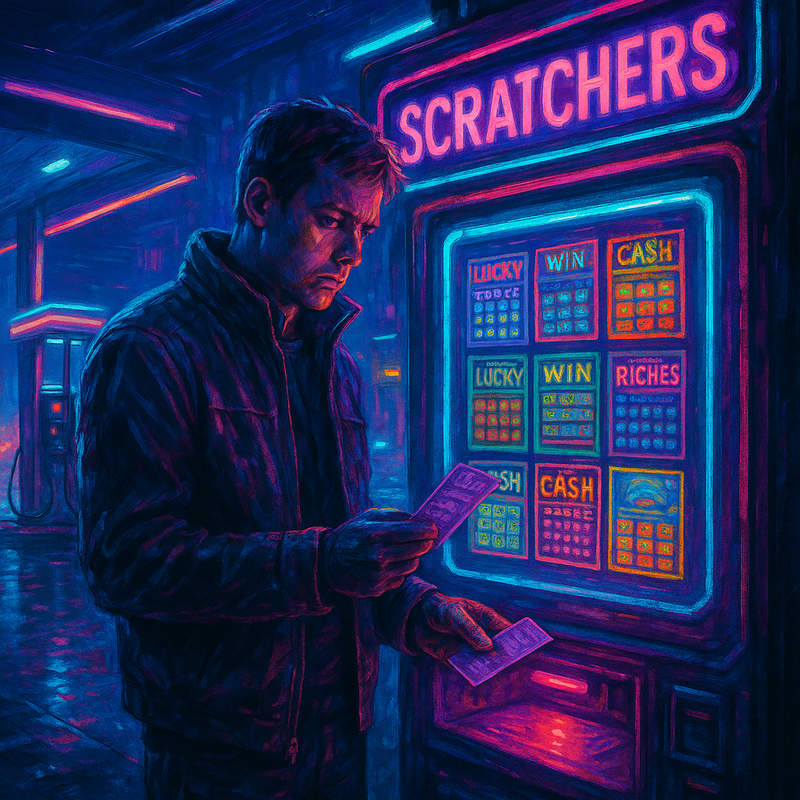
Walk into any convenience store and you'll see a wall of scratch-off tickets competing for your attention. Bold colors. Big dollar signs. Names like "MEGA MILLIONS SPECTACULAR" in all caps. The lottery commissions spend serious money on packaging design because it works. People grab the flashiest ticket on the rack without thinking twice.
Here's what that approach misses: every single scratch-off game has different odds, and those odds change over time. A game that launched with 10 jackpots might only have 2 left. Or the opposite, a less popular game that nobody's paying attention to might still have most of its top prizes sitting there unclaimed.
This concept is called jackpot hunting, and it's one of the most straightforward edges you can get in scratch-offs. The idea is simple: before you spend your money, find out which games still have jackpots available and which ones are already cleaned out.
Think of it like walking into a poker room. You wouldn't sit down at the first table you see. You'd look around, figure out where the soft games are, and pick the best spot. Scratch-offs work the same way. The "best" ticket isn't the prettiest one. It's the one where the big prizes haven't been claimed yet.
Before you buy, check two things:
How many top prizes are still available in that game, and how long the game has been on sale. If a game launched months ago and the jackpots are already gone, the only prizes left are small ones. You're paying full price for a ticket that can't possibly give you the big hit you're hoping for.
Want to skip the guesswork? Savvy Scratch shows you real-time jackpot odds for every scratch-off game in your state. See which tickets still have top prizes and which ones are already dead, for less than the cost of two scratch-offs per month. Use code 20PERCENT at signup for 20% off.
Tip 2: Start Small and Learn As You Go
There's a temptation when you're new to go straight for the $20 or $30 tickets. Bigger ticket, bigger prizes, right? That logic isn't wrong exactly, but it's incomplete. And it can drain your budget fast if you don't know what you're doing yet.
Here's what I tell people who are just getting started: treat your first few weeks like a learning phase. Buy $1 to $5 tickets. Get comfortable with how different game formats work. Crosswords play differently than match-three games, which play differently from multiplier games. Each format has its own pace and payout structure.
More importantly, starting small lets you test the habits that actually matter, like checking odds before you buy, tracking your results, and setting a budget. Those habits are worth way more than any single $30 ticket.
Once you've got a feel for the games and you're consistently checking jackpot availability before every purchase, then you can start moving up in price point. By that time, you'll know enough to pick the $20 game with strong remaining odds instead of the $20 game that's been cleaned out.
The goal isn't to spend as little as possible. It's to make sure every dollar you spend is going toward a game that's actually worth playing.
Tip 3: Check the Jackpot Odds, Not Just the "Win Odds"
This is where most players get tripped up, even experienced ones.
Every scratch-off ticket has printed odds on the back. Something like "Overall odds: 1 in 4.5." Sounds decent, right? But that number includes everything. Free tickets. Break-even prizes. Winning $2 on a $2 ticket. Those aren't really "wins" in any meaningful sense.
If you're playing scratchers because you want a shot at a life-changing payout, the number that matters is the jackpot odds, the actual probability of hitting a top prize. And here's the thing most people don't realize: those jackpot odds change constantly.
When a game launches, the top prize odds are based on the total number of tickets printed. But as tickets sell and prizes get claimed, the math shifts. Sometimes in your favor, sometimes against you.
I wrote a full breakdown on how odds calculators work if you want to see the actual math. But the short version is this: a game that started with 1-in-1.3-million jackpot odds might currently sit at 1-in-380,000 because tickets have sold but the top prize is still out there. That's more than a 3X improvement, and you'd never know it from looking at the packaging.
On the flip side, a game might have started with great odds but all the jackpots are already gone. The ticket is still on the shelf. Still costs the same. Still has the same flashy design. But there's literally zero chance of hitting the big one.
The takeaway: don't trust the printed odds on the ticket. They're a snapshot from launch day. What you need are the current odds, which factor in what's been sold and what prizes remain.
Stop playing dead games. Savvy Scratch updates jackpot odds daily for every game in your state, across 13 states and growing. You'll see at a glance which tickets have improving odds and which ones you should avoid completely. Check your state's odds now →
Tip 4: Keep Track of What You Spend and Win
This is the least exciting tip on the list. It's also the one that will save you the most money.
I've tracked every bet I've ever made as a professional gambler. Every poker session, every blackjack shoe, every edge play. Not because it's fun (it's not), but because tracking is the only way to know if you're actually winning or just feeling like you're winning.
Scratch-off players are especially vulnerable to selective memory. You remember the $100 winner. You forget the 30 losers that came before it. Without a record, you have no idea whether you're up, down, or treading water.
Keep it simple. A note on your phone works fine. Date, game name, ticket cost, result. That's it. At the end of the month, add it up. You'll either confirm that your approach is working or you'll see exactly where you're bleeding money.
Tracking also helps you spot patterns in your own behavior. Are you spending more after a big win? Are you chasing losses by buying extra tickets? Are you consistently picking games that underperform? You can't fix what you can't see.
For a deeper look at how to evaluate individual games using real data, check out this guide to lottery ticket analysis. It breaks down exactly what to look for when you're comparing one game against another.
Tip 5: Use the Data to Play Smarter
Here's the thing that separates professionals from amateurs in any form of gambling: professionals make decisions based on information, not instinct.
In blackjack, that means counting cards to know when the deck favors the player. In poker, that means reading bet sizing and position. In scratch-offs, it means knowing which games have the best remaining jackpot odds before you walk up to the counter.
Most players treat every scratch-off purchase like a coin flip. Grab a ticket, hope for the best. But scratch-offs aren't random in the way people think. Every game is a finite pool of tickets with a fixed number of prizes. As tickets sell, the math changes. Some games get better over time. Some get worse. And a few are outright dead, still on the shelf with zero top prizes remaining.
You don't need a math degree to take advantage of this. You just need access to the data.
Three questions to ask before every purchase:
Does this game still have jackpots left? How many tickets have been sold versus how many remain? Are the current odds better or worse than when the game launched?
If you can answer those three questions, you're already playing smarter than the vast majority of scratch-off buyers. And over time, that edge compounds. You won't win every ticket. Nobody does. But you'll consistently be putting your money into games where the math is working with you instead of against you.
Play for Fun, but Play Smart
Scratchers are entertainment. I'm not going to pretend otherwise. The house always has an edge, and no amount of data is going to turn scratch-offs into a reliable income stream.
But there's a massive difference between buying blindly and buying with information. One approach wastes money on dead games. The other puts every dollar toward tickets where you actually have a shot.
Start with these five principles: don't buy based on looks, start small while you're learning, focus on jackpot odds instead of overall win odds, track every purchase, and use data to inform your picks.
Even as a complete beginner, following these steps puts you in a fundamentally better position than most people who've been playing scratchers for years. That's not hype. That's just math.
Ready to see the odds before you buy? Savvy Scratch gives you real-time jackpot tracking for every scratch-off game across 16 states. Find games where your shot at the top prize is dramatically better than average. Plans start at $5/month, less than a single scratch-off ticket. Use code 20PERCENT for 20% off your first payment. Start playing smarter →
About the Author: Doug Moeller is a professional gambler with over 15 years of experience in poker, blackjack card counting, and casino advantage play, with over $500K in lifetime winnings. He built Savvy Scratch to bring the same data-driven approach that works at casino tables to scratch-off lottery tickets. Follow Doug on X | YouTube